
Safety & Materials · Buyer's Guide
Are Food Replicas Safe and Non-Toxic?
By the Custom Food Replica team · Authorized US distributor & official partner of Iwasaki, Japan's original food replica makers.
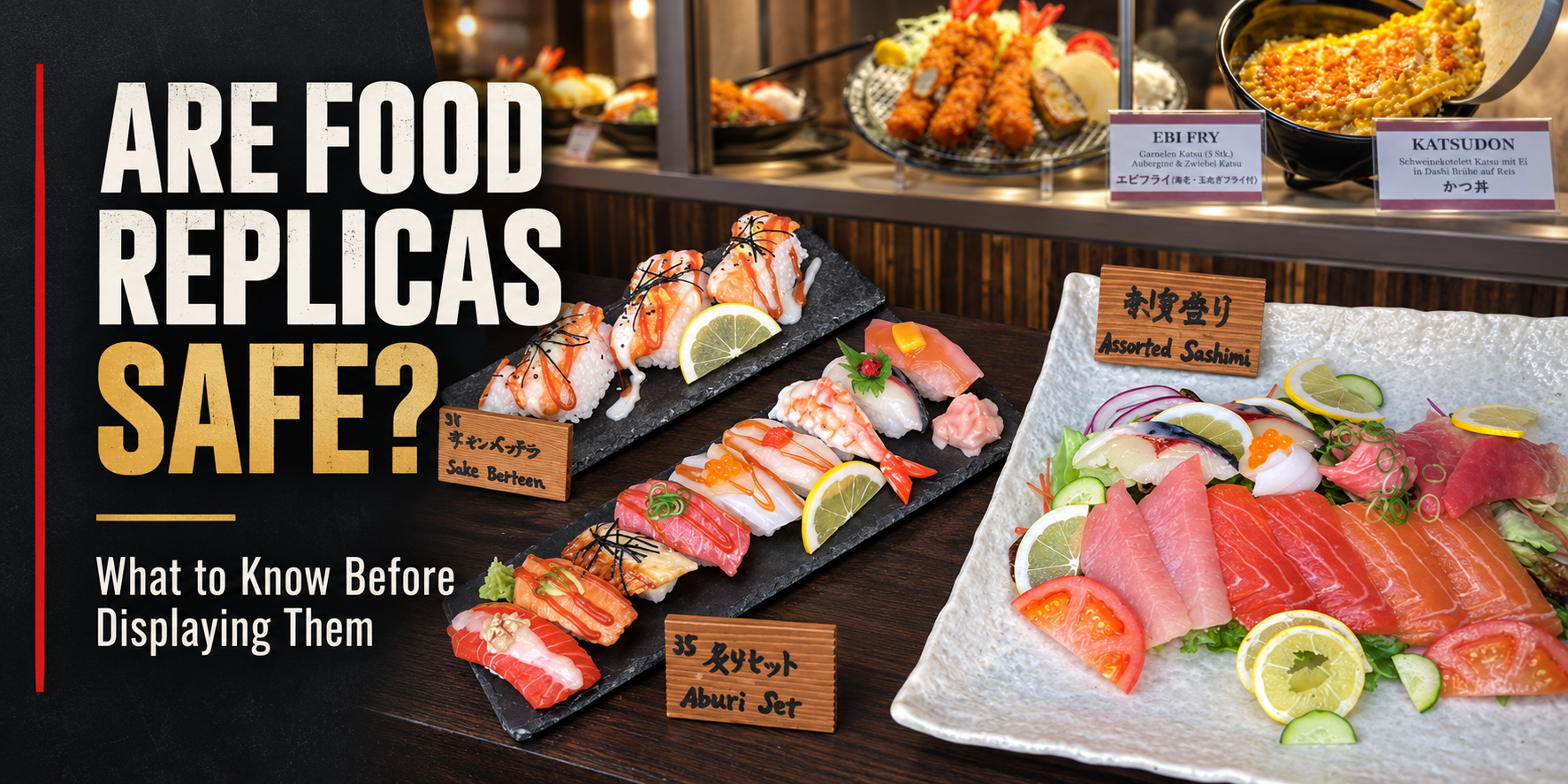
Quick answer
Yes, quality food replicas are non-toxic and safe to display and handle. Once cured, they are made of inert materials that do not rot, harbor bacteria, or attract pests. Two honest caveats: they are display objects, not food, so they are never meant to be eaten or used to serve food that will be eaten, and material quality matters, because cheap PVC can contain additives like phthalates. For children's settings or museum use, ask the maker for material documentation.
Key facts
- Finished food replicas are inert and safe for normal display and handling.
- Food replicas are not edible and are not a food-contact (tableware) product.
- Cheap PVC can contain phthalates and other additives; quality makers use stable, well-finished materials.
- For strict uses such as children's settings or museums, request material safety documentation.
What food replicas are made of
Food replicas are made from resin, PVC, and silicone. A silicone mold is taken from a real dish, the piece is cast in resin or PVC, and then it is hand-painted. Once these materials are fully cured and finished, they are solid and stable, which is why a good replica sits on display for years without changing. The full process is in our how food replicas are made guide.
The safety picture depends far less on “plastic, yes or no” and more on which materials, how well made, and for what use. Here is the honest breakdown.
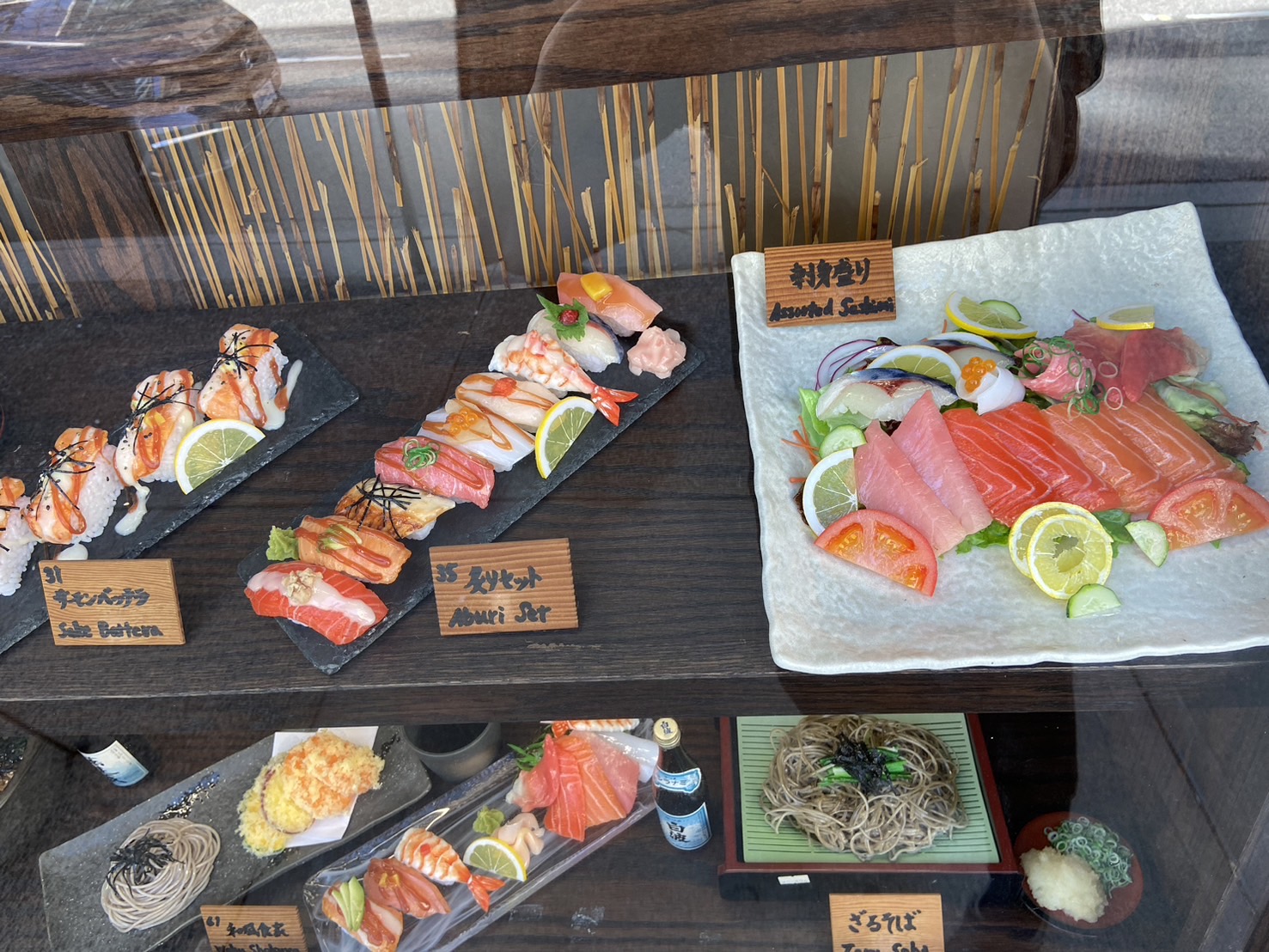
Are food replicas toxic?
For normal display and handling, no. A finished, quality replica is inert: you can place it in a window, on a counter, or in a case and handle it safely. It does not off-gas noticeably under normal conditions, does not spoil, and does not attract pests, which is a large part of why it is used instead of real food.
The nuance is the material. PVC in particular can contain plasticizers such as phthalates, along with other additives, and cheap or poorly made pieces are where those concerns live. Well-made replicas use stable, properly cured materials and are finished so nothing migrates in ordinary use. If you have strict requirements, the right move is not to avoid replicas, it is to ask the maker what the piece is made of and request documentation. This is one more reason where your replica is made matters.
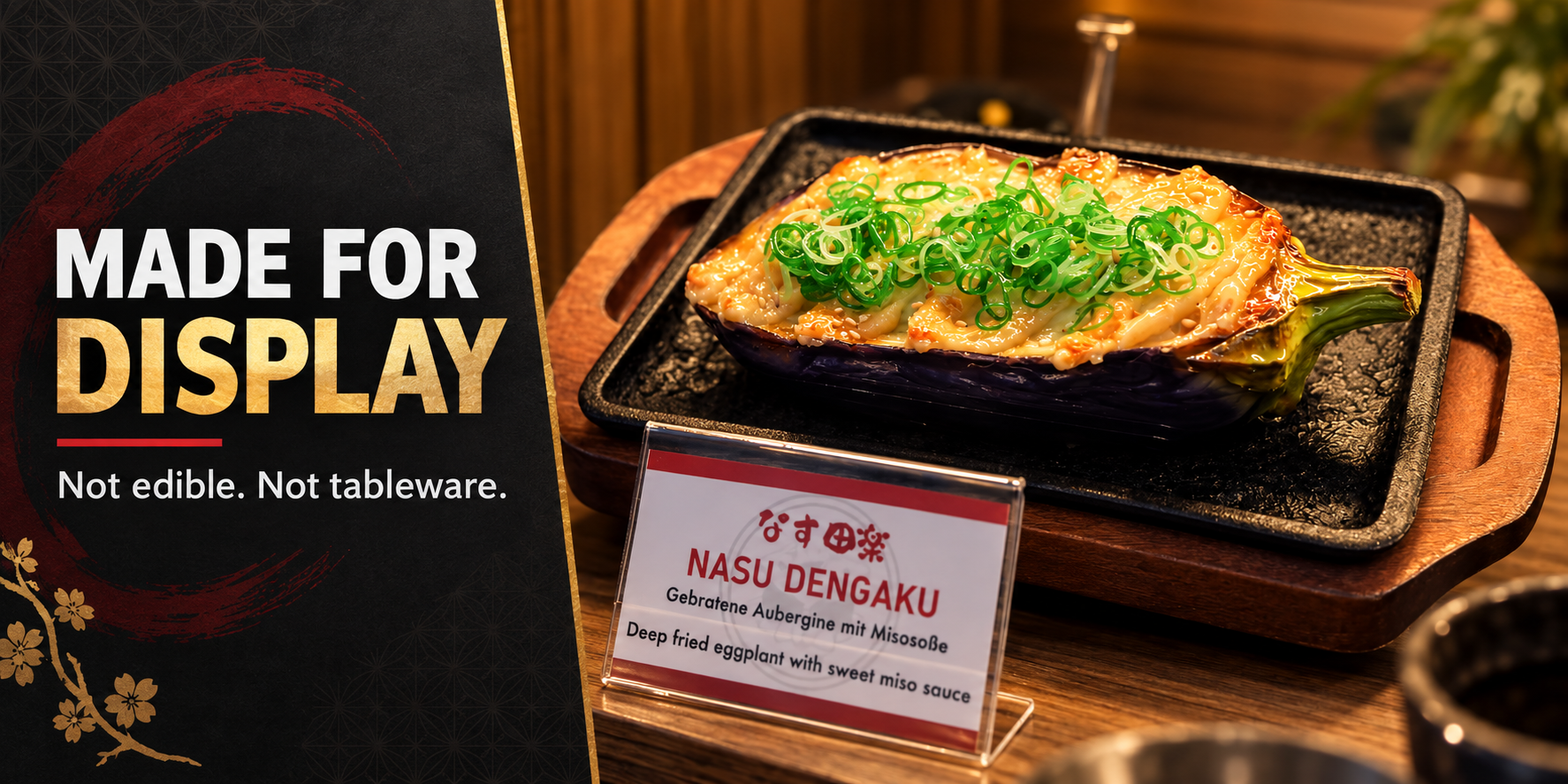
Are they safe to use around real food?
Yes, for display. A quality replica is non-porous and wipeable, so it will not harbor bacteria the way a sponge or cutting board can, and it will not spoil sitting next to real food in a window or case.
One important clarification, because “food-safe” gets used loosely: a food replica is safe to display in a food environment, but it is not food-contact-safe in the tableware sense. It is not edible, and you should not use it as a surface to serve food that will be eaten. Think of it as a lifelike display object, not as a plate.
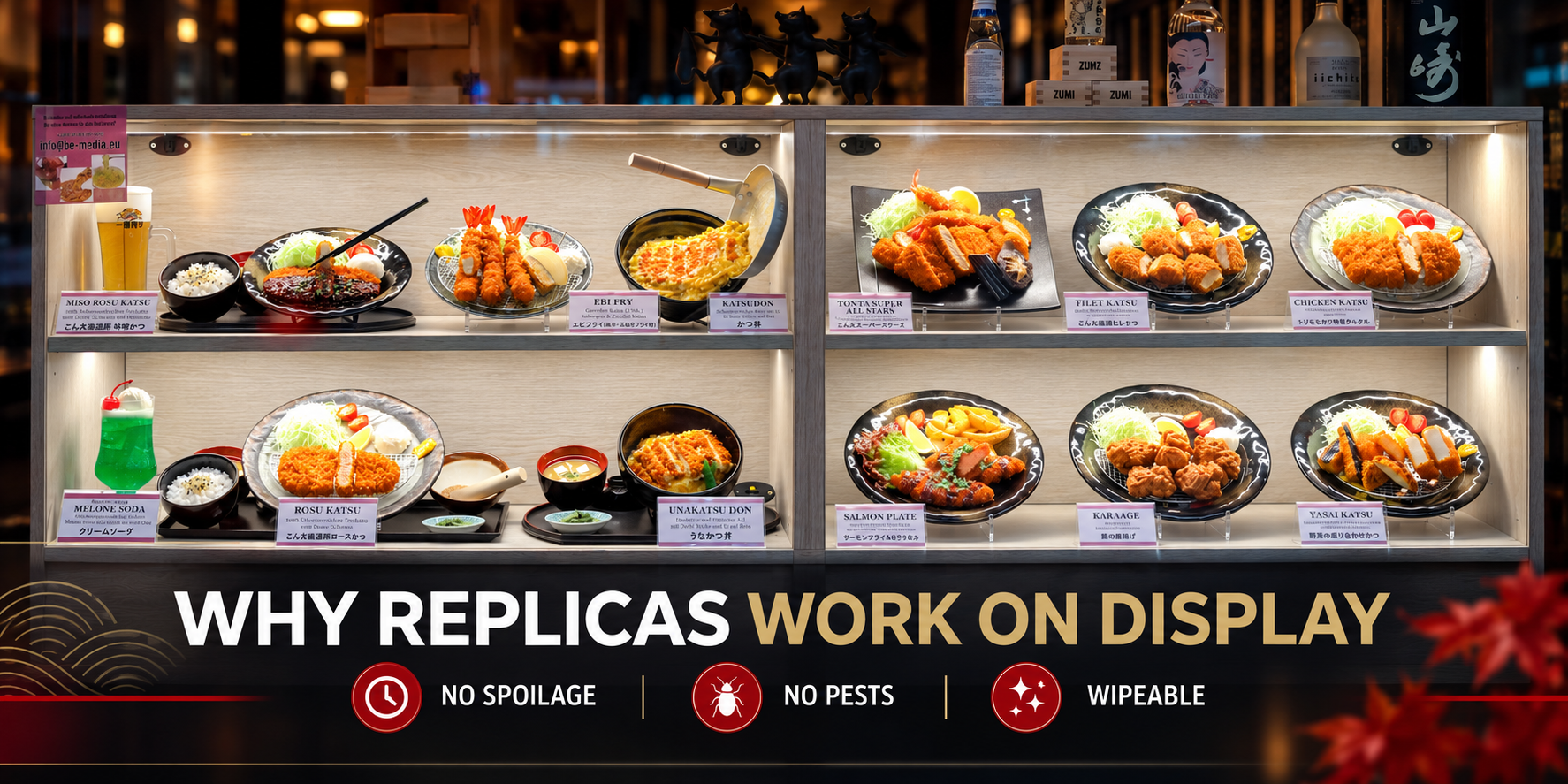
Are they safe for children and schools?
Food replicas are widely used in education and training, and quality pieces are non-toxic. Two real cautions apply. First, they are realistic enough to be mistaken for food, so they should be kept away from infants and toddlers who might try to eat them, both as a choking risk and because they are not food. Second, products intended for children fall under stricter rules (in the US, the CPSIA limits phthalates and lead in children's items), so for a classroom or a young-child setting, choose pieces made with certified phthalate-free or food-grade materials and ask the supplier to confirm it.
Are they safe for museums and historical sites?
For museums, replicas solve the biggest problem real food creates: they are inert and pest-free, so they will not rot, mold, or draw insects near collections, which is exactly why institutions use them for period settings and exhibits. The conservation nuance is off-gassing. Over long periods, especially inside sealed display cases near sensitive artifacts, some plastics can emit trace vapors, so for artifact-adjacent or enclosed placement, ask the maker about material stability and request off-gassing or material data before installing. For open, general display, this is not a concern.
Heat and fire
Replicas are durable in normal indoor and window conditions, but they are not heatproof or fireproof. Keep them away from open flame, cooking heat, and extreme temperatures, since PVC and lower-grade materials can soften or melt, and burning PVC releases harmful fumes. In a sunlit window, ask about UV-stable finishes so the piece holds color over years. Most indoor displays stay showroom-fresh for 3 to 5 years, and well-maintained pieces last 10 years or more.

What to ask before you buy
For any sensitive use, a good maker can answer these:
- What materials is the piece made from (resin, PVC, silicone), and is the PVC phthalate-free?
- Can you provide a safety data sheet (SDS) or material documentation?
- Is it suitable for children's use, and does it meet the relevant standards?
- Is the finish UV-stable for a sunlit window?
- Is it rated for enclosed museum cases, or should I request off-gassing data?
If a supplier cannot answer these, that itself tells you something about the quality.
How CFR handles it
Custom Food Replica provides genuine, hand-crafted replicas made by Iwasaki, the Japanese company at the origin of the craft, using materials chosen for stable, long-lasting display. For museum, education, or other sensitive projects with specific safety requirements, tell us what you need and we will confirm the material details for your order. Pieces are made to your exact dish, priced all-in from $400 each, and shipped nationwide. You can see finished work on our restaurant displays page or read the background on shokuhin sampuru.
The bottom line
A quality food replica is non-toxic and safe to display and handle, and it is far safer around a collection or a food counter than real food, which rots and attracts pests. Just remember what it is: a lifelike display object, never something to eat or serve food on. For children's or museum use, buy quality and ask for the material documentation. Good makers will have it.
Have a project with specific safety requirements?
Tell us the setting and we will confirm the material details for your order.
Frequently asked questions
- Are food replicas toxic?
- No, for normal display and handling. Finished quality replicas are inert. The caveat is cheap PVC, which can contain additives like phthalates, so material quality and documentation matter for sensitive uses.
- Are food replicas food-safe?
- They are safe to display in food environments because they are non-porous and will not harbor bacteria, but they are not edible and are not food-contact tableware. Never eat them or serve food on them.
- Are food replicas safe for children?
- Quality, phthalate-free pieces are non-toxic and used in education, but they look like real food, so keep them away from infants and toddlers and choose materials that meet children's-product standards.
- Are food replicas safe to use in museums?
- Yes, and they are preferred over real food because they are inert and pest-free. For sealed cases near delicate artifacts, ask the maker about off-gassing and material stability first.
- What are food replicas made of?
- Resin, PVC, and silicone. Once cured and finished, these materials are solid and stable, which is what lets a replica last for years.
- Can food replicas melt or catch fire?
- They can soften or melt at high heat and should not be near open flame, since burning PVC releases harmful fumes. Keep them away from cooking heat and use UV-stable finishes for sunny windows.
About the author
Custom Food Replica is the authorized US distributor and official partner of Iwasaki, the Japanese maker at the origin of the shokuhin sampuru food replica craft. We build hyperrealistic, made-to-order food replicas for U.S. restaurants, food trucks, retailers, museums, and educators, each sculpted and hand-painted to match a client's needs and shipped nationwide.
Sources
- U.S. Consumer Product Safety Commission: CPSIA limits on phthalates in children's products.
- Toxic-Free Future: additives found in some PVC formulations and the hazards of burning PVC.
- U.S. FDA: what qualifies as a food-contact substance, and why display objects are not tableware.
- Canadian Conservation Institute: plastics in museum collections and off-gassing in enclosed display cases.