
Buyer's Guide · Comparison
Custom vs Stock Fake Food: Which Do You Actually Need?
By the Custom Food Replica team · Authorized US distributor & official partner of Iwasaki, Japan's original food replica makers.
Quick answer
Use stock fake food when the piece is generic, out of close view, and temporary, such as background filler or a play prop. Use a custom food replica when the piece represents your brand or is seen up close, such as a window, counter, or case display. They are not cheap and expensive versions of the same thing. They are different products for different jobs, and choosing stock for a job that needs custom is the most common and most expensive mistake buyers make.
Key facts
- Stock fake food is mass-produced from generic molds. A custom food replica is sculpted from your exact dish.
- A generic replica cannot match your specific plating, so it will not represent your brand.
- A custom food replica reads as real up close, which is what makes a customer stop and look.
- Custom Food Replica is the authorized US distributor and official partner of Iwasaki, the origin of the craft.
What is the difference?
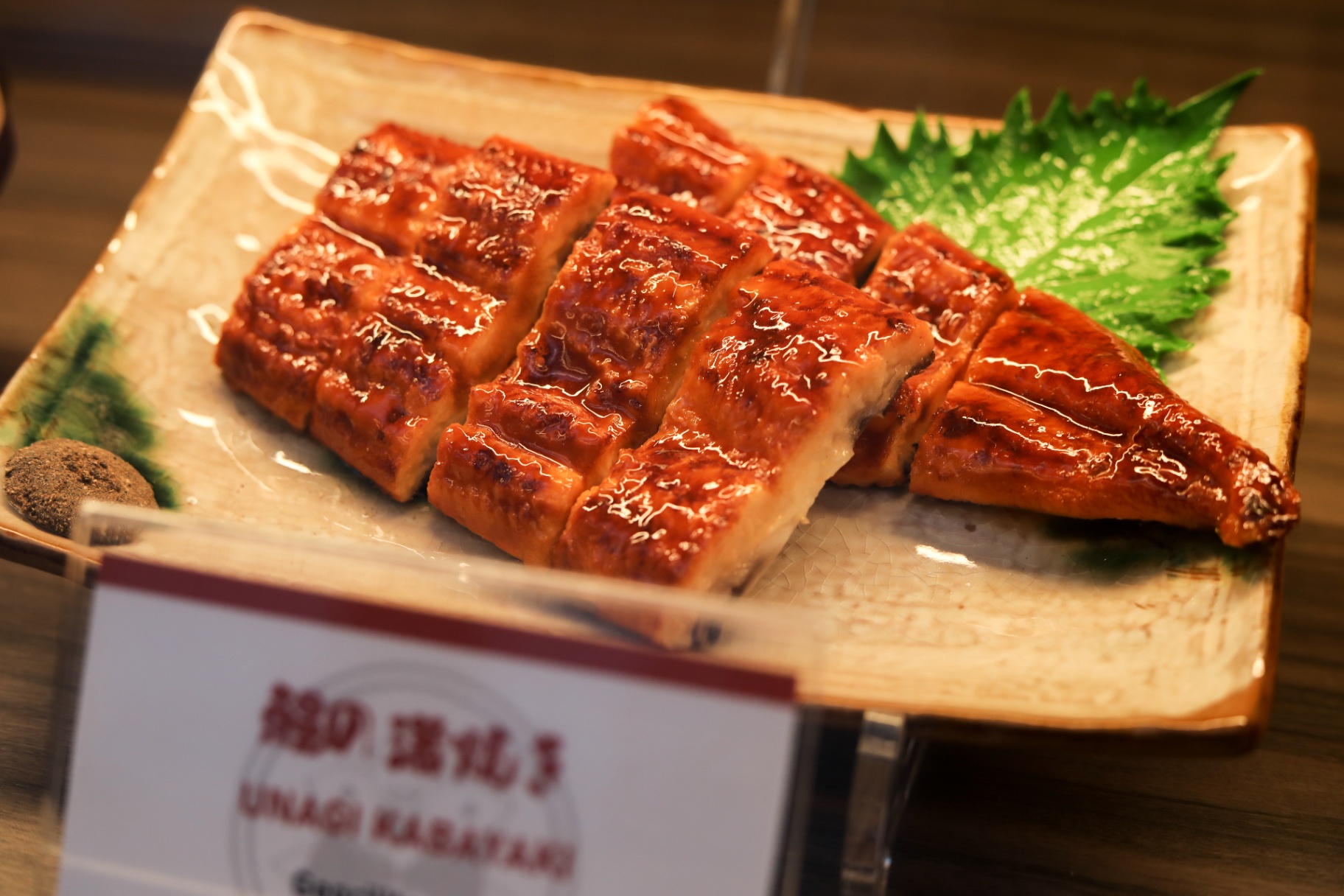
Stock fake food is made ahead of time in standard shapes from generic molds, then sold off the shelf. A stock burger is a generic burger, not yours. It is available immediately, and up close it tends to give itself away with visible seams, flat color, and a plastic sheen.
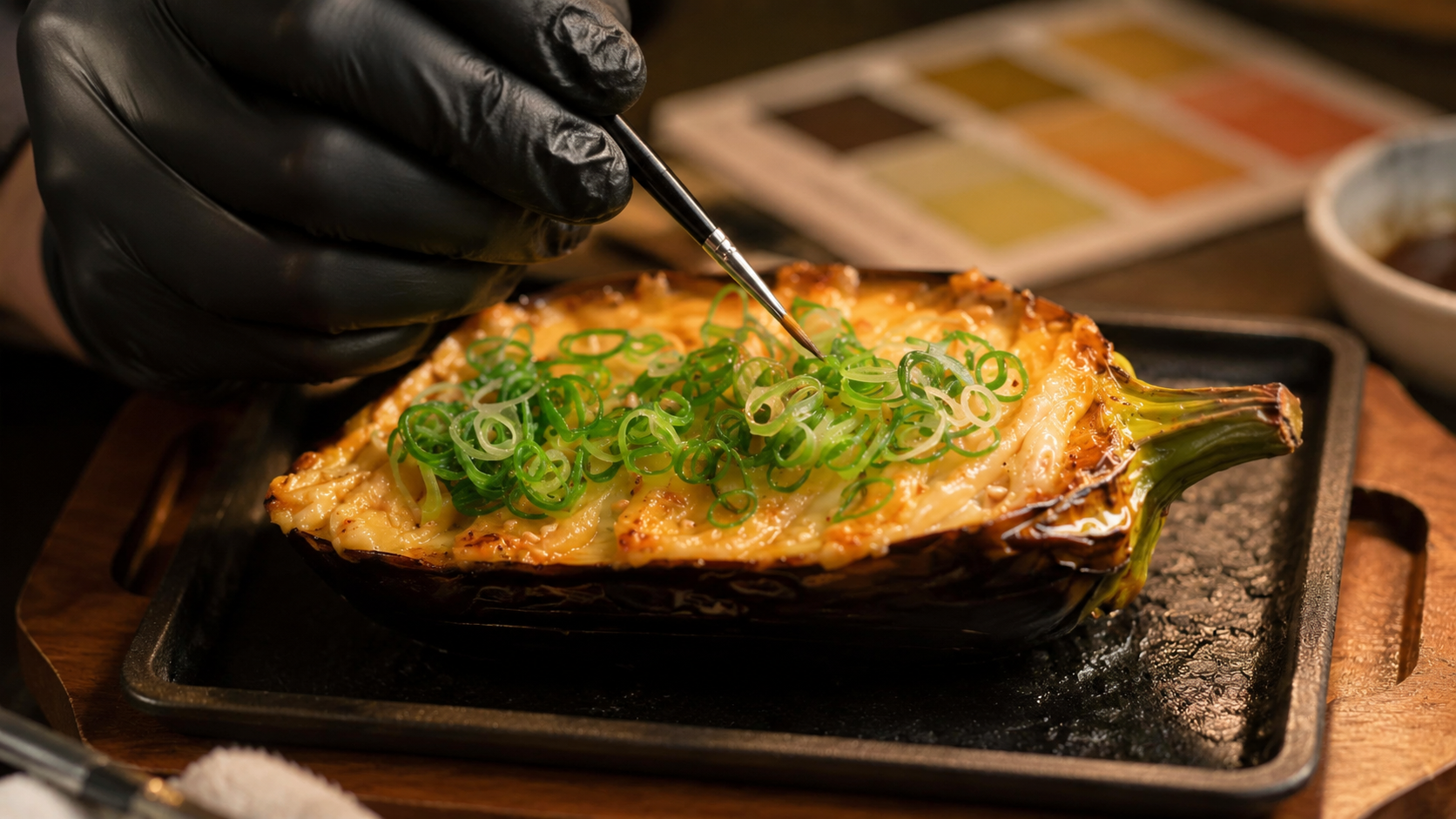
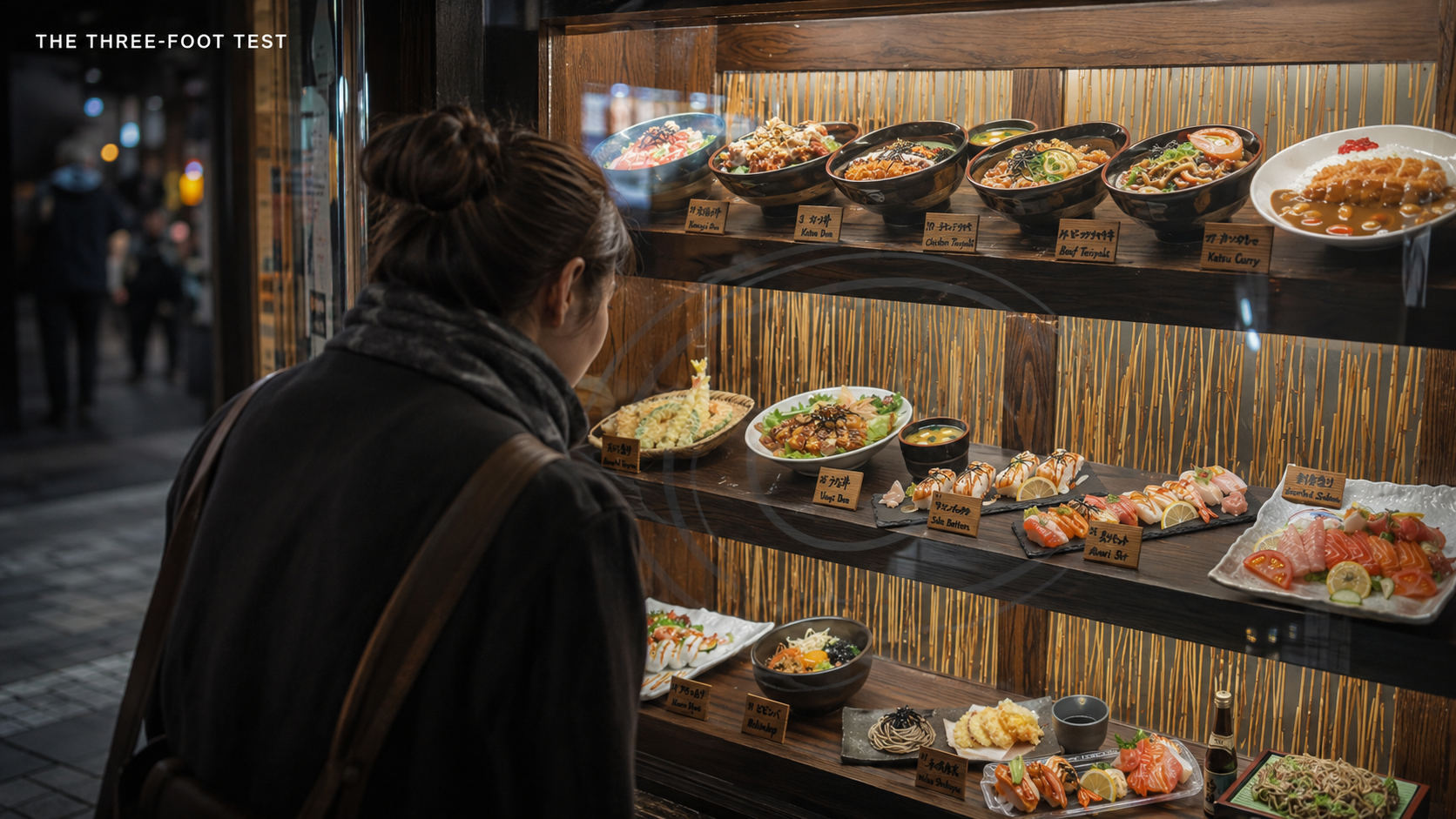
A custom food replica is built to order from your actual dish. It is molded from the real food, cast in resin and silicone, and hand-painted down to your char, gloss, and portion, so it reads as your specific plate rather than a generic stand-in. It takes lead time to make and costs more, and it is the only one that convinces a customer standing three feet away.
Custom vs stock: the comparison
| Criteria | Stock fake food | Custom food replica |
|---|---|---|
| What it is | Generic, mass-produced from standard molds | Sculpted and hand-painted from your exact dish |
| Realism up close | Gives itself away: seams, flat color, plastic sheen | Reads as real, matches your plating |
| Matches your menu | No, generic versions only | Yes, your specific dish |
| Brand fit | None | On-brand and signature |
| Availability | Off the shelf, immediate | Made to order, needs lead time |
| Lifespan | Varies, and cheap pieces degrade quickly | 3 to 5 years indoors, 10 years or more when well maintained |
| Cost | Low upfront, replaced when it fails the job | From $400 per piece all-in, one-time, years of life |
| Best for | Background filler, play, temporary props | Windows, counters, cases, anything seen up close |
When stock fake food is the right call
Stock has real, legitimate uses, and custom would be overkill for them:
- Background filler far from the viewer, where no one looks closely.
- Set dressing for a scene, stage, or booth where pieces sit in the distance.
- Play food, education, and training, where realism matters less than durability and cost.
- Temporary or one-off setups you will not reuse.
If the piece is generic, out of close view, and short-term, stock does the job and there is no reason to pay for custom.
When you need a custom food replica
Custom is the right call whenever the piece has to represent you or hold up to a close look:
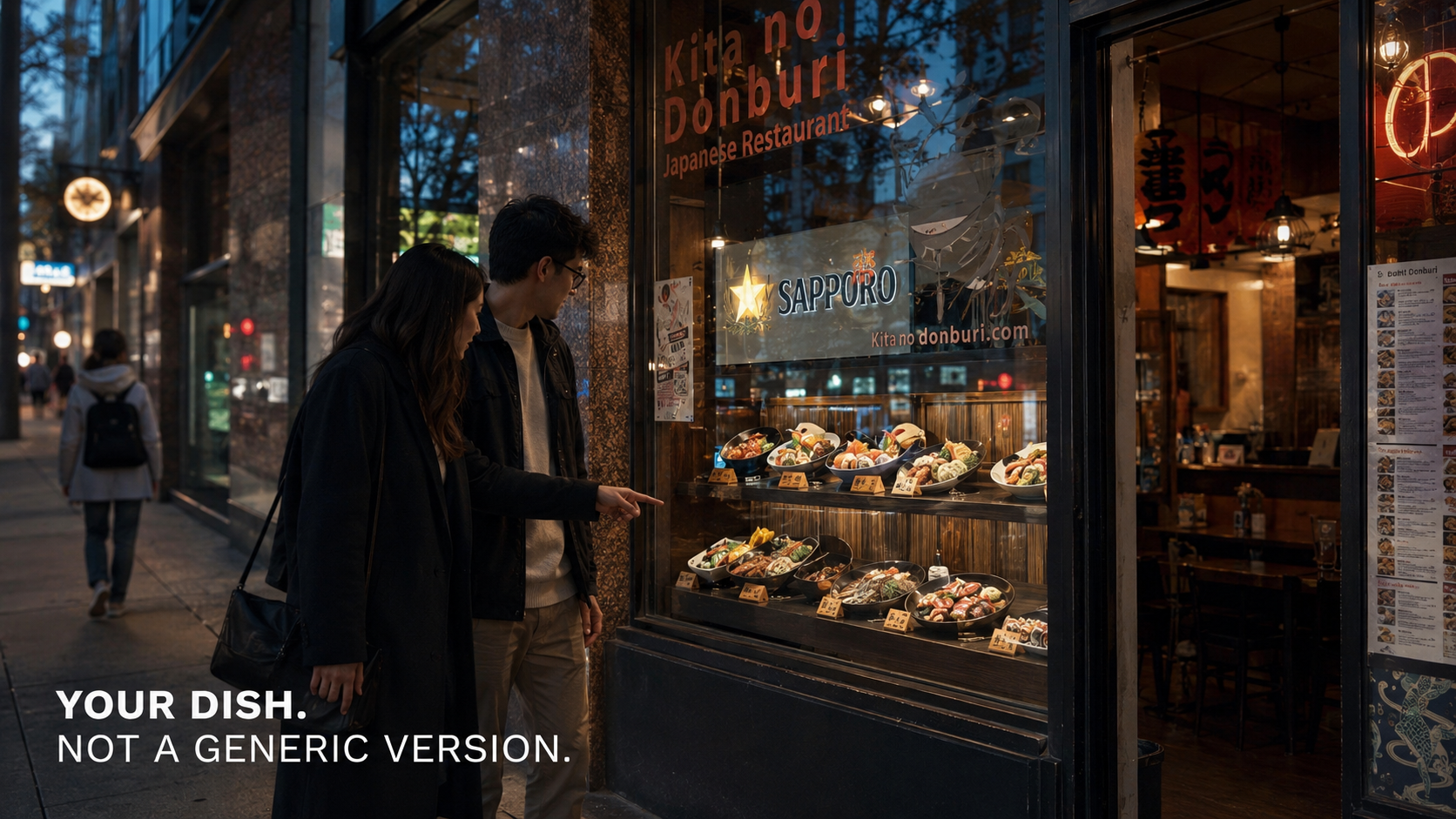
- Window and counter displays, where a passerby judges your food from a few feet away.
- Signature and brand-specific dishes, where a generic version tells customers nothing about you.
- Anything a camera focuses on, in photography, film, or a hero product shot.
- Displays meant to last, where you want years of use rather than a piece that yellows in a season.
The mistake that costs the most
The expensive error is not buying custom. It is buying stock for a job that needed custom. A generic plastic burger in your window will not sell your burger, because nobody looks at it twice. The entire value of a display is the wait, is that real? moment that makes a stranger stop, and that moment only comes from a piece realistic enough to match your actual dish. Stock cannot create it, so a cheap stock display in a brand-facing spot is not a bargain. It is money spent on something that does not do the one job you bought it for.
Judged over the years a well-kept replica lasts, a custom piece that actually brings customers in costs pennies a day, while a generic one that fools no one is wasted no matter how little it cost.
Which do you need?
Use stock fake food when
The piece is generic, viewed from a distance, and temporary, such as background filler, set dressing, or play food.
Use a custom replica when
The piece represents your brand, is seen up close, or needs to hold its look for years on a window, counter, or case.
Getting custom right with CFR
Custom Food Replica builds made-to-order replicas matched to your exact dishes, made by Iwasaki, the Japanese company at the origin of the shokuhin sampuru craft, and shipped nationwide. Pricing is all-in and starts at $400 per piece, with the per-piece price coming down as an order fills our shipping containers, so a full display costs less per piece than a single item. See the full cost breakdown, the display buyer's guide, or our restaurant work.
One note on care: replicas are built for indoor display. Keep them out of direct all-day sunlight, dust them gently, and bring outdoor or food truck pieces inside after service. Most displays stay showroom-fresh for 3 to 5 years, and well-maintained pieces last 10 years or more.
The bottom line
Stock and custom fake food solve different problems. Stock is fine for generic, background, and temporary needs. For the dishes that represent you and the displays customers actually look at, custom is what reads as real and does the job, and it is the only version worth putting where it counts.
From $400 per piece, all-in.
Built to your exact dishes, shipped nationwide, quoted to your display.
Frequently asked questions
- What is the difference between custom and stock fake food?
- Stock fake food is mass-produced in generic shapes and sold off the shelf, while a custom food replica is sculpted and hand-painted from your exact dish so it matches your specific plating.
- Is stock fake food good enough for a restaurant window?
- Usually not. Generic stock pieces give themselves away up close, so for a window or counter viewed from a few feet away, a custom replica of your actual dish is what convinces customers.
- When should I choose stock over custom?
- Choose stock when the piece is generic, viewed from a distance, and temporary, such as background filler, set dressing, or play food.
- Why is a custom food replica more expensive?
- Because it is individually sculpted and hand-painted from your specific dish rather than mass-produced from a generic mold, so you are paying for an exact match and years of realistic display.
- How much does a custom food replica cost?
- Custom replicas start at $400 per piece all-in, including shipping and customs, with the per-piece price decreasing at higher quantities, and each order quoted to your dishes.
- How long does a custom food replica last?
- Most pieces stay showroom-fresh for 3 to 5 years indoors, and well-maintained pieces kept out of direct sunlight can last 10 years or more.
- How long does a custom replica take to make?
- Custom work is made to order and needs production lead time, which we confirm on your quote, while stock pieces ship immediately but cannot match your specific dish.
About the author
Custom Food Replica is the authorized US distributor and official partner of Iwasaki, the Japanese maker at the origin of the shokuhin sampuru food replica craft. We build hyperrealistic, made-to-order food replicas for U.S. restaurants, food trucks, and retailers, each sculpted and hand-painted to match a client's exact dishes and shipped nationwide.