
Buyer's Guide · Costs & Uses
Realistic Food Models: What They Cost and Where to Use Them
By the Custom Food Replica team · Authorized US distributor & official partner of Iwasaki, Japan's original food replica makers.
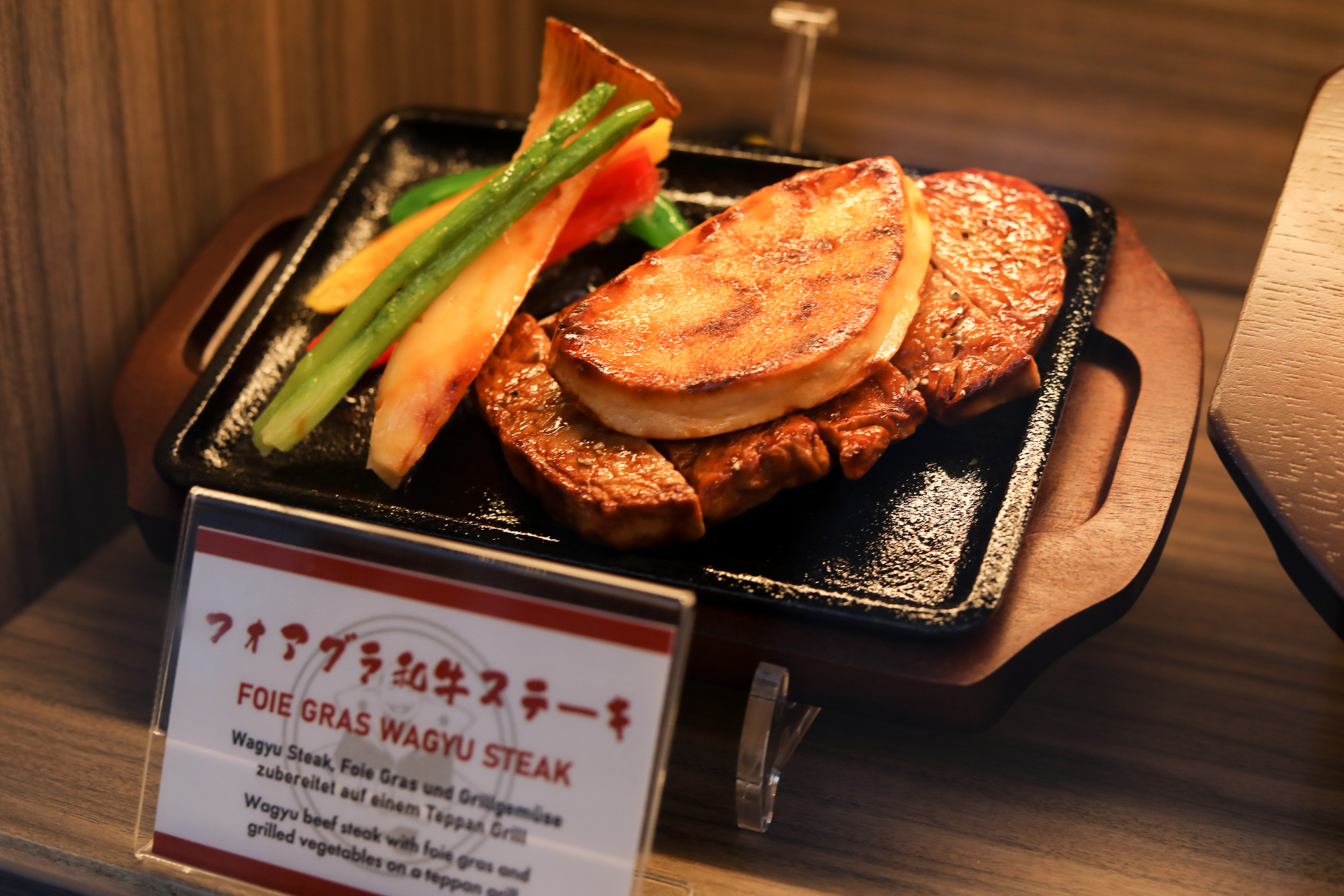
The short version: Realistic food models, also called replica food or food replicas, are lifelike models of real dishes that never spoil. There's a wide gap between cheap generic display food and genuine hand-sculpted replicas made from your exact dish, and only the second kind actually sells for you. This guide breaks down what really drives the cost, what genuine custom replicas are worth, and where they earn their keep. At Custom Food Replica, custom pieces start at $400 each all-in, with shipping and customs included.
What are realistic food models?
A realistic food model is a durable, non-edible replica of a real dish, built to look convincingly like the genuine article. You'll see the same thing called replica food, a food replica, fake food, or by its original Japanese name, shokuhin sampuru. The best ones are made from food-grade silicone, PVC, and resin, then hand-painted so the color, gloss, and texture read as real, right down to grill marks, glaze, and steam.
Unlike a photo or a printed menu, a food model is three-dimensional and sits in the customer's actual space, which is why it stops people and sells dishes in a way flat images can't. And unlike real food, it looks perfect for years with no spoilage, refrigeration, or waste.
What drives the cost of a food model
Before the numbers, it helps to know what you're paying for. A few factors move the price more than anything else:
- Complexity: a single onigiri is cheap; a loaded ramen bowl or a multi-component set meal takes far more time and skill.
- Size: larger pieces use more material and more labor.
- Realism required: a background filler piece costs less than a hero-grade piece meant to hold up in a close, well-lit view.
- Custom vs. stock: a generic off-the-shelf model is cheaper than one sculpted from your exact dish.
- Single piece vs. full display: a whole window installation is many pieces plus layout and mounting.
- Quantity: ordering in bulk usually lowers the per-piece cost.
- Special effects: floating noodles, dripping cheese, condensation, and steam add craft and cost.
What realistic food models cost
Two very different products get sold under the name “fake food,” and confusing them is the most expensive mistake a buyer can make.
At one end is generic, mass-produced display food: imported pieces in standard shapes, cheaply made and cheaply priced. They can pass in a photo, but up close they give themselves away with visible seams, flat colors, and a plastic smell. They're built for background filler, play sets, and temporary props, not for representing a real business. A generic plastic burger will never sell your burger, because nobody looks at it twice.
At the other end is what actually drives sales: genuine, hand-sculpted replicas made from your exact dish. These are molded from the real food, cast in resin and silicone, and hand-painted down to the char, gloss, and portion, so a passerby reaches out to check whether they're real. That “is it real?” moment is what stops foot traffic and moves customers, and it only comes from real craft. It's a different product, not a cheaper or pricier version of the same thing.
That's why genuine replicas are priced like the craft they are. Authentic handcrafted food models have always been valued as small works of art, made by hand, one at a time, by trained artisans. You're paying for a piece that matches your dish exactly, reads as real in a close, well-lit view, and keeps selling for years, not a generic mold pulled off a shelf. Judged over a long life, a replica that actually brings customers in costs pennies a day, while a cheap one that fools no one is money wasted no matter how little it cost.
What CFR charges
Our replicas are custom, made to order, and always quoted to your specific dishes, because a taco counter and a sushi window are very different projects. A few things set our pricing apart:
- Prices are all-in. The number includes shipping and customs, not just the base piece. Many overseas suppliers quote a low base price that balloons once international freight and duties are added, compare all-in to all-in.
- It's genuine Iwasaki craft. Every piece is made by Iwasaki, the Japanese company at the origin of the food replica craft, so you're getting the real tradition, not a lookalike.
- Custom food replicas start at $400 per piece, all-in.
Per-piece pricing comes down as your order fills our shipping containers (each holds roughly three to four pieces), so a full display costs less per piece than a single item. Typical all-in ranges:
| Quantity | Price per piece (all-in) |
|---|---|
| 1 piece | $500 to $750 |
| 2 to 4 | $475 to $675 each |
| 5 to 8 | $450 to $625 each |
| 9 to 12 | $425 to $575 each |
| 13 to 20 | $410 to $550 each |
| 21+ | From $400 each (wholesale) |
These are typical ranges; the low end is a simpler, smaller piece and the high end is a complex, multi-component dish. Your final price is quoted to your exact dishes. Tell us what you need for an exact quote.
Wondering if the display pays for itself? See our food truck ROI breakdown or the restaurant launch playbook with an interactive ROI calculator.
Where to use realistic food models
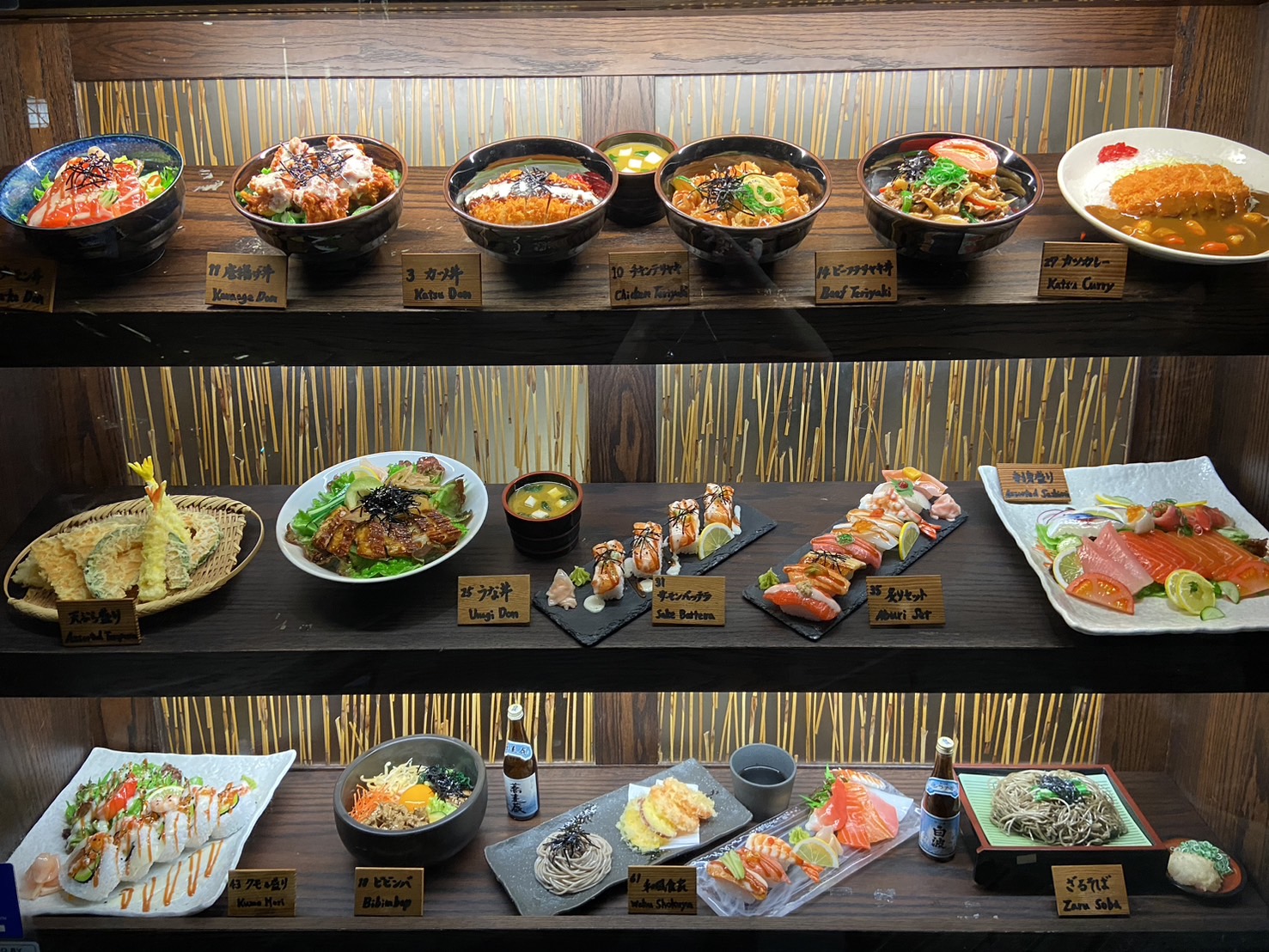
The same model that sells sushi in a Tokyo window works across a surprising range of settings. The most common:
- Restaurant windows: the classic use, showing your signature dishes to everyone who walks by, day and night.
- Counters and point of sale: a small lineup at the register that drives add-ons and impulse orders.
- Food trucks: counter-ready pieces that survive outdoor events without spoiling, and pay back fast.
- Retail and grocery: bakery cases, deli counters, and packaged-food displays that always look fresh.
- Trade shows and events: booth displays that look appetizing for a three-day show with zero upkeep.
- Hotels, buffets, and cafeterias: menu and buffet displays that never wilt under service lights.
- Museums and education: historically accurate or nutritional models that are inert, safe, and pest-free.
- Photography, film, and theater: durable props that hold their look through long shoots and long runs (see our guide to food props).
How realistic are they, really?
Realistic enough that people reach out to touch them to check. The realism comes from the craft: a silicone mold is taken from the real dish to capture texture exactly, cast in resin or PVC, then hand-painted and airbrushed to match the real food's color and sheen. Effects that are impossible with real food, like noodles suspended mid-lift or a glaze caught mid-drip, are part of the toolkit.
The best way to judge is to watch one up close.
How to choose (and what to avoid)
A quick buyer's checklist:
- Match the tier to the use. Background or temporary display can use stock. Anything the customer or camera looks at closely deserves premium or custom.
- Go custom for signature or brand-specific dishes. A generic burger won't sell your burger.
- Prioritize silicone and hand-painted detail for realism and durability, and ask about UV or fade resistance for sunlit windows.
- Avoid the red flags: very low prices, strong odors, visible seams, and inconsistent sizing all signal poor quality.
- Plan the whole display at once to capture bulk pricing and a consistent look.
- Confirm lead time before you commit, especially if you're timing a launch or a season.
The bottom line
A realistic food model is a one-time purchase that keeps selling for years to come. Stock pieces cover generic, background needs cheaply. For the dishes that represent you, custom is what actually reads as real and moves customers. Custom Food Replica builds made-to-order replicas matched to your exact dishes, in the tradition of Iwasaki, the Japanese company at the origin of the craft, from $400 per piece all-in, and ships them nationwide. Tell us about your dishes for an exact quote, or see examples of our work.
From $400 per piece, all-in.
Custom replicas matched to your exact dishes. Shipping and customs included.
Frequently asked questions
- What are realistic food models?
- Realistic food models are durable, non-edible replicas of real dishes, also called replica food or food replicas, made from silicone, PVC, and resin and hand-painted to look real. They're used in restaurant windows, retail, events, and on film and photo sets.
- How much do realistic food models cost?
- It depends on what you're buying. Generic mass-produced display food is cheap but looks generic and only suits background use. Genuine hand-sculpted replicas made from your exact dish are priced like craft, they're the ones that stop foot traffic and sell. At Custom Food Replica, custom replicas start at $400 per piece all-in (shipping and customs included), and per-piece pricing comes down with quantity since each shipping container holds about three to four pieces.
- Why are custom food models more expensive than stock ones?
- Because they're sculpted and hand-painted from your specific dish rather than mass-produced from a generic mold. You're paying for craft and an exact match to your plating, which is what makes them read as real.
- What are food models made of?
- Usually food-grade silicone, PVC, and resin. Silicone captures fine texture, and the pieces are hand-painted for realistic color and gloss.
- How long do they last?
- Well-made models typically last 3 to 5 years with normal care, and many last 10 or more without spoiling or fading, which is why they're cost-effective despite the higher upfront price.
- How long does a custom order take?
- Custom work commonly takes about four to eight weeks in the industry. Contact us for a lead-time estimate tied to your specific order.
- Where can I buy realistic food models?
- Generic stock pieces are widely available online for background use. For custom replicas of your exact dishes, Custom Food Replica builds made-to-order models and ships nationwide in the USA.
About the author
Custom Food Replica is the authorized US distributor and official partner of Iwasaki, the Japanese maker at the origin of the shokuhin sampuru food replica craft. We build hyperrealistic, made-to-order food models for U.S. restaurants, food trucks, retailers, and productions, each sculpted and hand-painted to match a client's exact dishes and shipped nationwide.
Sources
- DisplayFakeFoods.com and FakeFoodJapan, custom-order process and typical 4 to 8 week production turnaround.
- Industry fake food buying guides (2026), why very cheap mass-produced pieces are low quality (seams, odor, inconsistent sizing).
- Tofugu / FakeFoodJapan, authentic Japanese handcrafted sampuru valued and priced as artisan craft.