
Food Trucks · Display Ideas
Food Truck Menu Display Ideas That Stop the Crowd
By the Custom Food Replica team · Authorized US distributor & official partner of Iwasaki, Japan's original food replica makers.
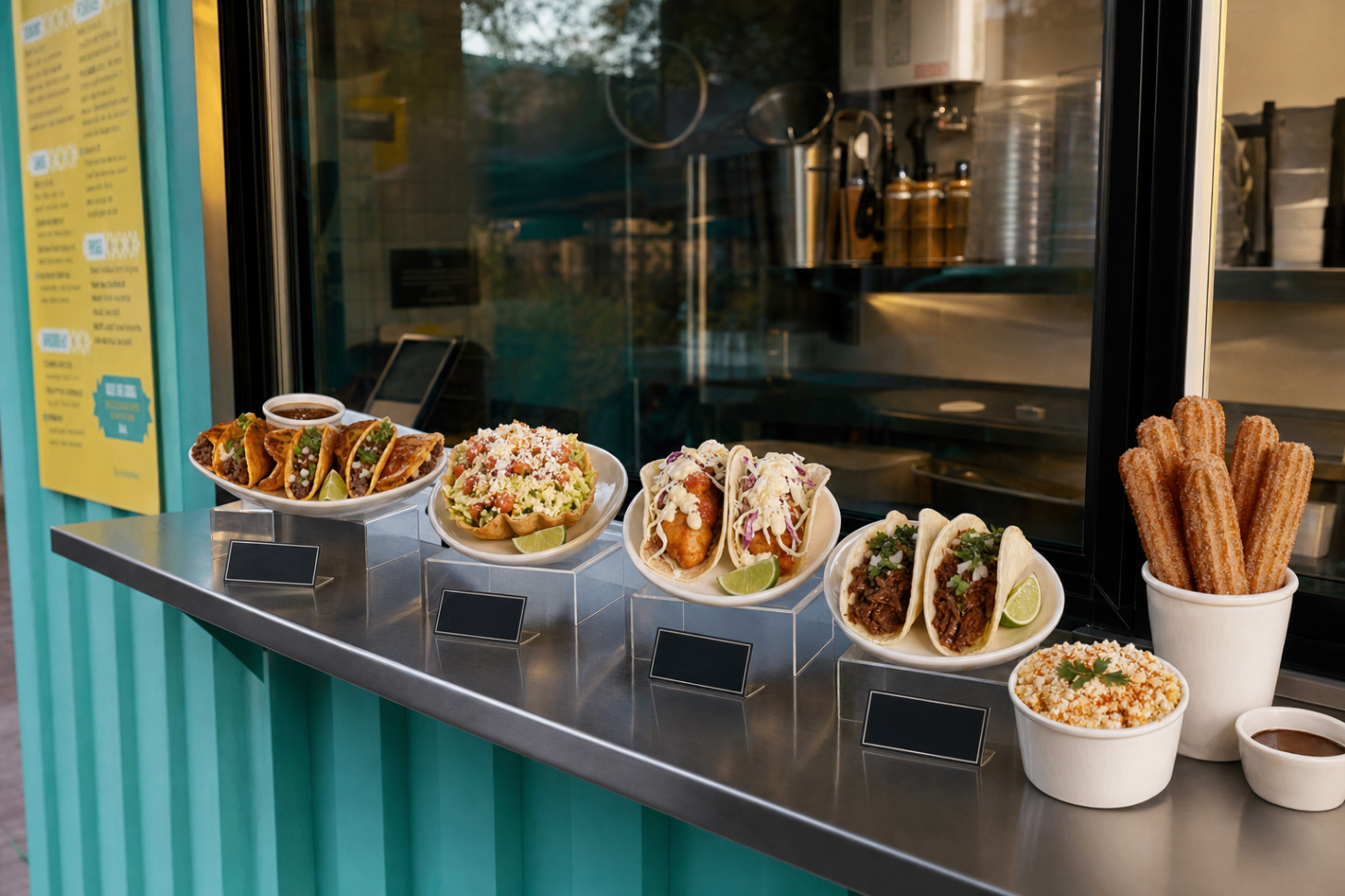
The short version: At a busy festival, you get about two seconds to turn a passing glance into a customer. A chalkboard asks people to read, a photo menu asks them to imagine, and a screen reads as an ad. The one display that makes a stranger stop, look twice, and get in line is your actual food shown in three dimensions. This guide compares the common food truck menu displays, then gives you practical ideas for building one that stops the crowd.
The problem: two seconds in a crowded row
A food festival is a wall of trucks competing for the same hungry, distracted people. Nobody stops to read a menu when they don't yet know they want your food. They decide with their eyes, fast, and they keep walking unless something makes them want what you're selling before they've finished passing your window.
That's the job of a menu display: not to list your food, but to sell it in the half-second someone looks over. Some displays do that well and some barely do it at all, so it's worth comparing them honestly.
Food truck menu display options, compared
Chalkboard / handwritten sign
- Cost:
- Low
- Weatherproof:
- No, rain smears it
- Stops a crowd:
- Barely, it reads as text
- Best for:
- Daily specials, prices, a handmade vibe
Printed banner / menu board
- Cost:
- Low to medium
- Weatherproof:
- Mostly
- Stops a crowd:
- A little, but reads as an ad
- Best for:
- Branding and listing the full menu
Backlit lightbox
- Cost:
- Medium
- Weatherproof:
- Yes
- Stops a crowd:
- Somewhat, at night
- Best for:
- Lit photo menus after dark
Digital screen
- Cost:
- Medium to high
- Weatherproof:
- Needs power, glares in sun
- Stops a crowd:
- Some, motion catches the eye
- Best for:
- Rotating offers, hours, promos
Photo menu
- Cost:
- Low
- Weatherproof:
- Varies
- Stops a crowd:
- Little, everyone has one
- Best for:
- Showing items customers can't picture
3D food replicas
- Cost:
- Higher upfront, lasts years with care
- Weatherproof:
- Event-ready; store inside after use
- Stops a crowd:
- Yes, it reads as real food
- Best for:
- Stopping foot traffic and driving orders
Every option here has a place. A chalkboard is great for a daily special, a banner carries your branding, a screen is handy for hours and promos. But notice the fourth column. Only one of these actually makes a stranger stop, and it's the only one that shows your food as food instead of as text, graphics, or a picture.
Why 3D replicas stop the crowd when a sign doesn't
A flat menu, printed or digital, lives on a surface your brain reads as advertising and filters out, the same way you filter every other sign in the row. A three-dimensional dish sitting on the counter reads as real food. It catches light, casts a shadow, and sits in the customer's actual space, which is the difference between “this truck sells tacos” and “I want that taco.”
There's a second thing a replica does that no sign can: it triggers the “wait, is that real?” reaction. People stop, lean in, sometimes reach out to check, and that pause is all you need to make the sale. It's also endlessly shareable, which matters for a business that lives on social.
We put real numbers behind this in our food truck ROI breakdown: on conservative assumptions, a display that pulls just five extra orders per event pays for itself in under two months and then keeps adding profit for years. A sign can't make that claim.
Food truck menu display ideas that work
Here are the ideas worth stealing, whatever you sell.
1. Line your best sellers along the counter at eye level
Put three to six of your top dishes right on the serving counter, lifted to eye level on small risers so they read from down the row, not flat where only the front row of a crowd can see them. This is the single highest-impact setup for a truck.
2. Lead with a hero, then bait the add-on
Anchor the display with your signature dish, then place a high-margin impulse item next to it. A cup of churros standing tall or a portion of elote does the quiet work of adding a dollar or two to orders that were only going to be tacos.
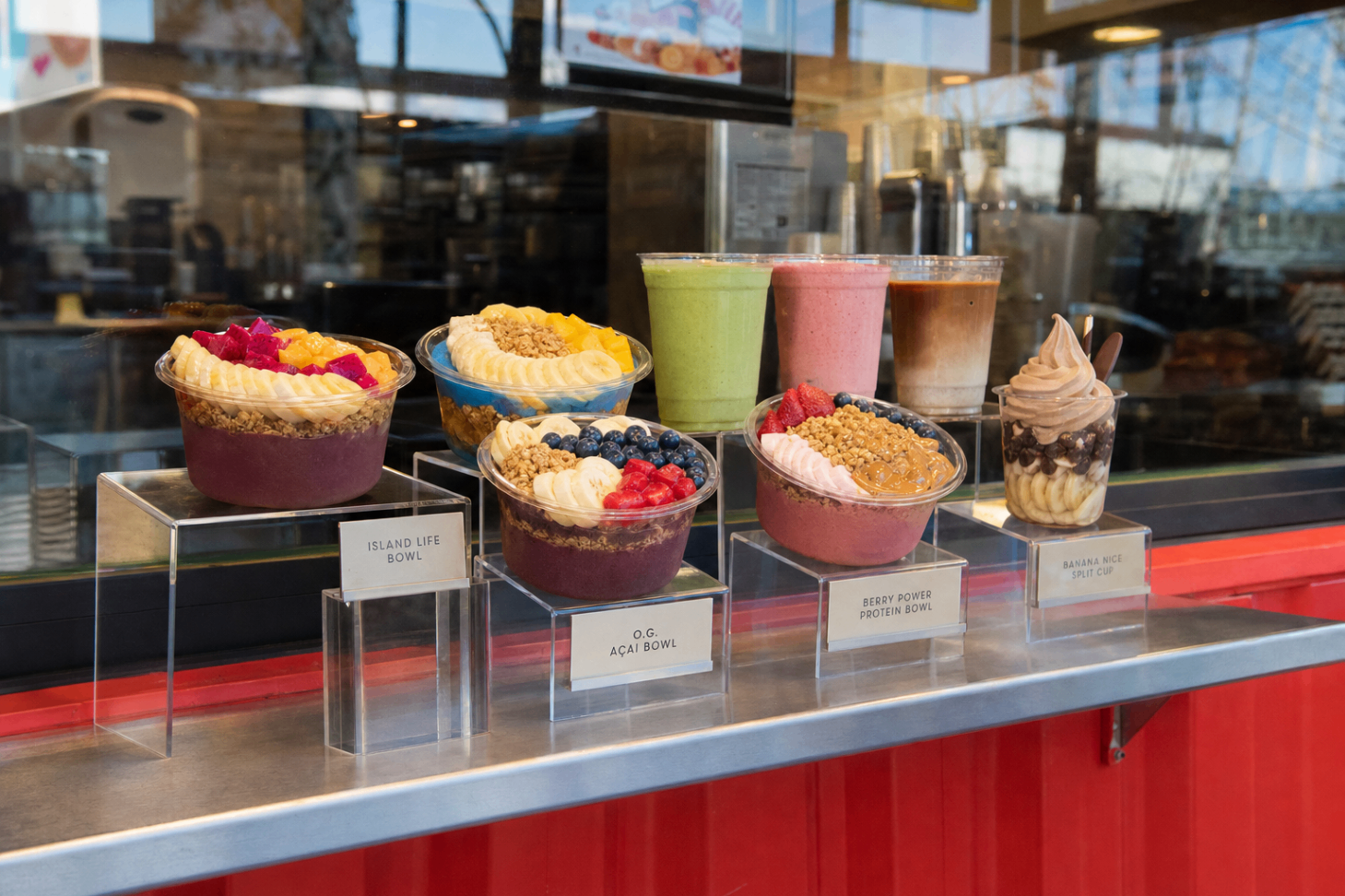
3. Show what real food can't survive outdoors
The dishes that are hardest to display for real are often your best sellers. Açaí bowls melt, smoothies separate, and ice cream is gone in minutes. A replica shows them at their perfect moment all day, in full sun, which turns your most spoilage-prone items into your most durable marketing.
4. Swap the menu by daypart, without tools
If you run brunch in a lunch lot and a different menu at a night market, magnetic-backed pieces let you restage the whole counter in seconds. No drilling, no mounts, no holes in your serving window. Daytime set in the morning, late-night set by dinner, same counter.
5. Freeze the “just-made” look
Fried food sells on crunch and sheen that vanish the second real food cools. A replica holds the golden, just-out-of-the-fryer look permanently, so a fish sandwich or a basket of hush puppies looks its best at hour eight of an event, not just hour one.
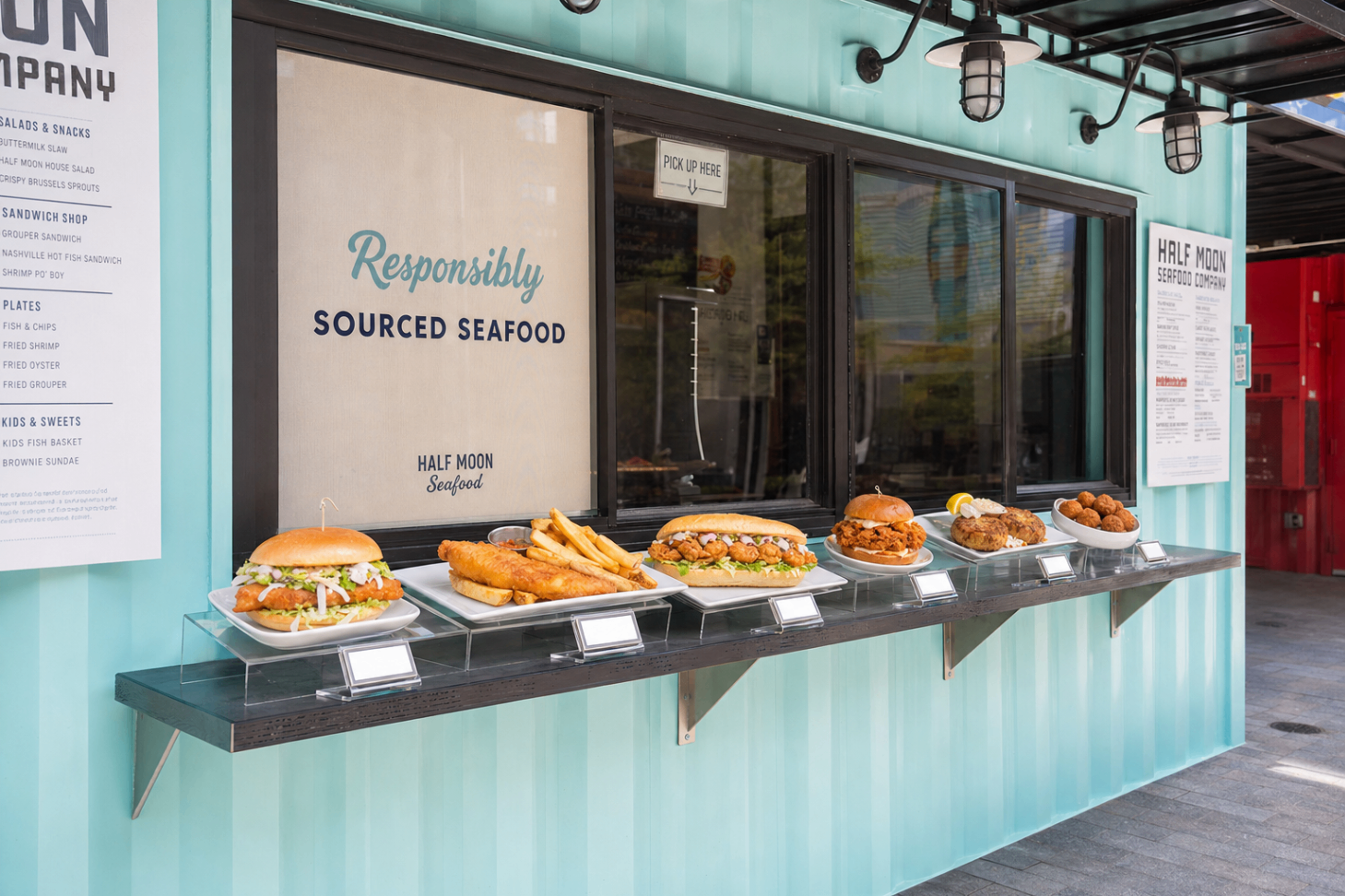
6. Build height and match your brand
Use risers to step dishes up so the display reads from a distance, and keep the pieces consistent with your truck's colors and vibe so the whole window looks intentional rather than cluttered. Our fake food display buyer's guide walks through layout, lighting, and mounting in more detail.
7. Make content out of it
Film the “is it real?” reveal: pick a piece up, tap it, set it next to the real dish. That clip markets your food and your truck at once, and it costs nothing once the display exists.
Built for the road
A few things make replicas the right call specifically for trucks. They hold up through a twelve-hour outdoor event, but they are not designed to live outside, so bring pieces back inside after service. They never spoil, so there's no daily re-plating and no nightly waste. And with magnetic mounting they travel well and restage fast, which suits a business that packs up and moves constantly. For a night market, light the display so it still stops people after dark, when a bright counter has the least competition for attention.
What it costs
Custom food replicas start at $400 per piece, all-in, with shipping and customs included. Because each shipping container holds roughly three to four pieces, the per-piece price comes down as your order grows, so a full counter lineup costs less per piece than a single item. A typical truck display of a few hero dishes is quoted to your menu. See the full cost breakdown or get an exact quote. For a deeper look at what drives price, read realistic food models: what they cost.
Every piece is made by Iwasaki, the Japanese company at the origin of the food replica craft, and we ship nationwide across the United States. Running a brick-and-mortar too? See how restaurants use displays.
The bottom line
Your menu display has one job at a festival: stop a stranger in the two seconds they look your way. A chalkboard, a banner, and a screen can inform someone who already stopped, but they can't make them stop. Your food, shown in three dimensions on the counter, can, and it keeps doing it every event for years to come.
From $400 per piece, all-in.
Built to your menu, event-ready, and easy to pack away after service.
Frequently asked questions
- What's the best menu display for a food truck?
- For stopping a passing crowd, a 3D food replica display of your best sellers outperforms chalkboards, banners, and screens, because it reads as real food rather than as text or an ad. Signs and boards are still useful for prices, hours, and daily specials.
- Do 3D food displays actually increase sales?
- They're built to. On conservative assumptions, a display that draws five extra orders per event pays for itself in under two months, then adds profit for years. See our food truck ROI breakdown for the math.
- Can food replicas be used at outdoor events?
- They hold up through a full day outdoors, but they are not designed to live outside. Bring pieces back inside after service and, with normal care, most last 3 to 5 years; well-maintained pieces can last 10 or more.
- Can I change the display between events or menus?
- Yes. Magnetic-backed pieces let you restage the counter in seconds with no drilling, so you can switch between a daytime and a late-night menu on the same truck.
- How much does a food truck display cost?
- Custom replicas start at $400 per piece all-in, including shipping and customs, with the per-piece price dropping as you add pieces. A full counter lineup is quoted to your menu.
- Are replicas worth it compared to a cheap chalkboard?
- They do different jobs. A chalkboard lists specials; a replica display stops the crowd and drives orders. Over the years a well-maintained replica lasts, the extra orders it brings in far outweigh the upfront difference.
About the author
Custom Food Replica is the authorized US distributor and official partner of Iwasaki, the Japanese maker at the origin of the shokuhin sampuru food replica craft. We build hyperrealistic, made-to-order food displays for U.S. food trucks, restaurants, and retailers, each sculpted and hand-painted to match a client's exact dishes and shipped nationwide.
Sources
- Shop! Association (Shop! Magazine), research on visual decision-making and the effect of window and in-store displays on foot traffic.
- Retail TouchPoints, coverage of eye-level placement and the likelihood a product is noticed and chosen.
- Custom Food Replica food truck ROI analysis, the payback model behind the five-extra-orders figure. It is a model, not a guarantee.