
Restaurants · Display Ideas
Restaurant Window Display Ideas That Pull Walk-Ins
By the Custom Food Replica team · Authorized US distributor & official partner of Iwasaki, Japan's original food replica makers.
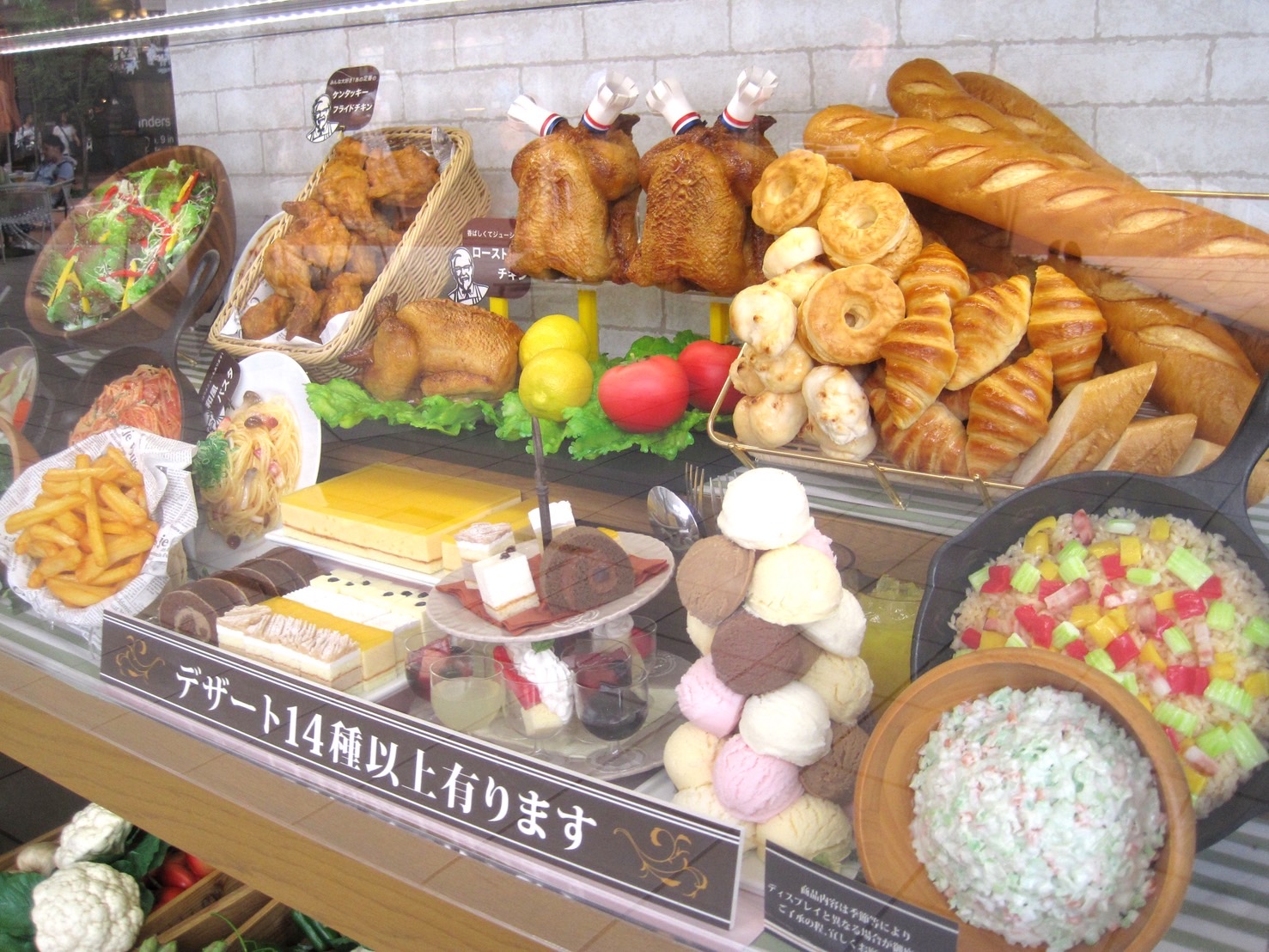
Quick answer
A restaurant window display uses realistic food replicas to show your dishes to people on the sidewalk, stopping foot traffic and turning passersby into walk-ins. The most effective displays lead with a few signature dishes, lift them to eye level, light them well, and keep the pieces realistic enough to make someone stop and look twice. Below are ten displays that do exactly that, with why each one works.
Key facts
- A restaurant window display uses food replicas to convert foot traffic into walk-ins.
- Well-executed window displays can lift foot traffic by around 23% (VM & Retail Magazine).
- Food replicas never spoil or need refrigeration, and last 3 to 5 years indoors, longer with care.
- Custom Food Replica is the authorized US distributor and official partner of Iwasaki, the origin of the craft.
Why window displays pull walk-ins
People decide with their eyes, and they decide fast. Retail research finds a passerby judges whether to step in within roughly two to three seconds of looking at a storefront, and that most buying decisions are driven by what shoppers see. A flat sign asks them to read. A three-dimensional dish in the window shows them the food and makes them want it. That is why the strongest restaurant window display ideas all share one trait: they show real-looking food, not text.
The ten ideas below use fake food, also called replica food or display fake foods, to do that job. Each entry pairs a real display with a short explanation of why it works.
Ten restaurant window display ideas
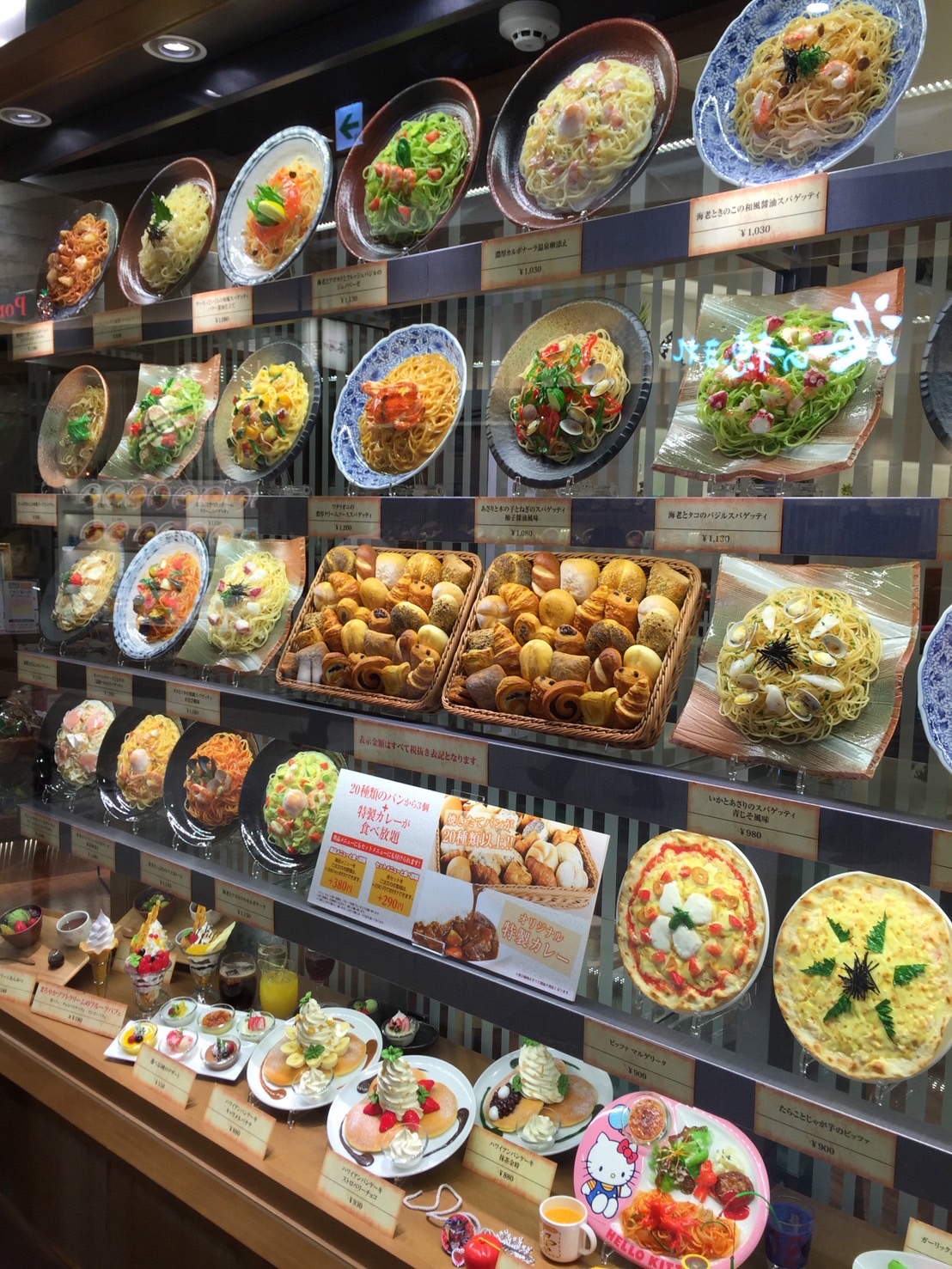
1. Fill the window with a full menu of set meals
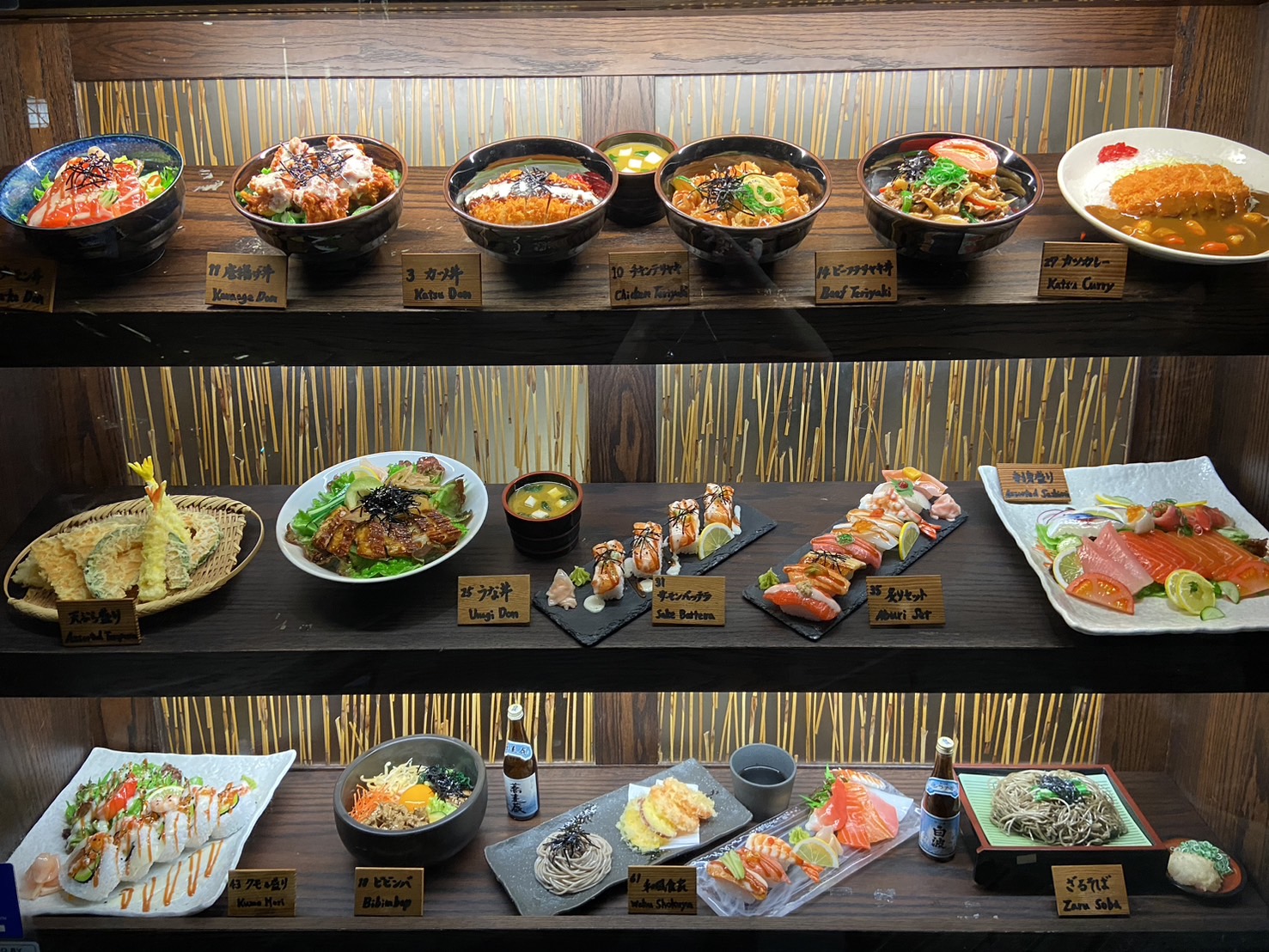
A full, lit window of dishes explains an entire menu at a glance. This works especially well for cuisines a passerby may not know well, because seeing the actual plates removes the guesswork that keeps hesitant diners walking. A window display communicates the menu in three dimensions, which a printed board cannot. Keep the pieces consistent and well spaced so the window reads as a curated menu rather than a crowded shelf.
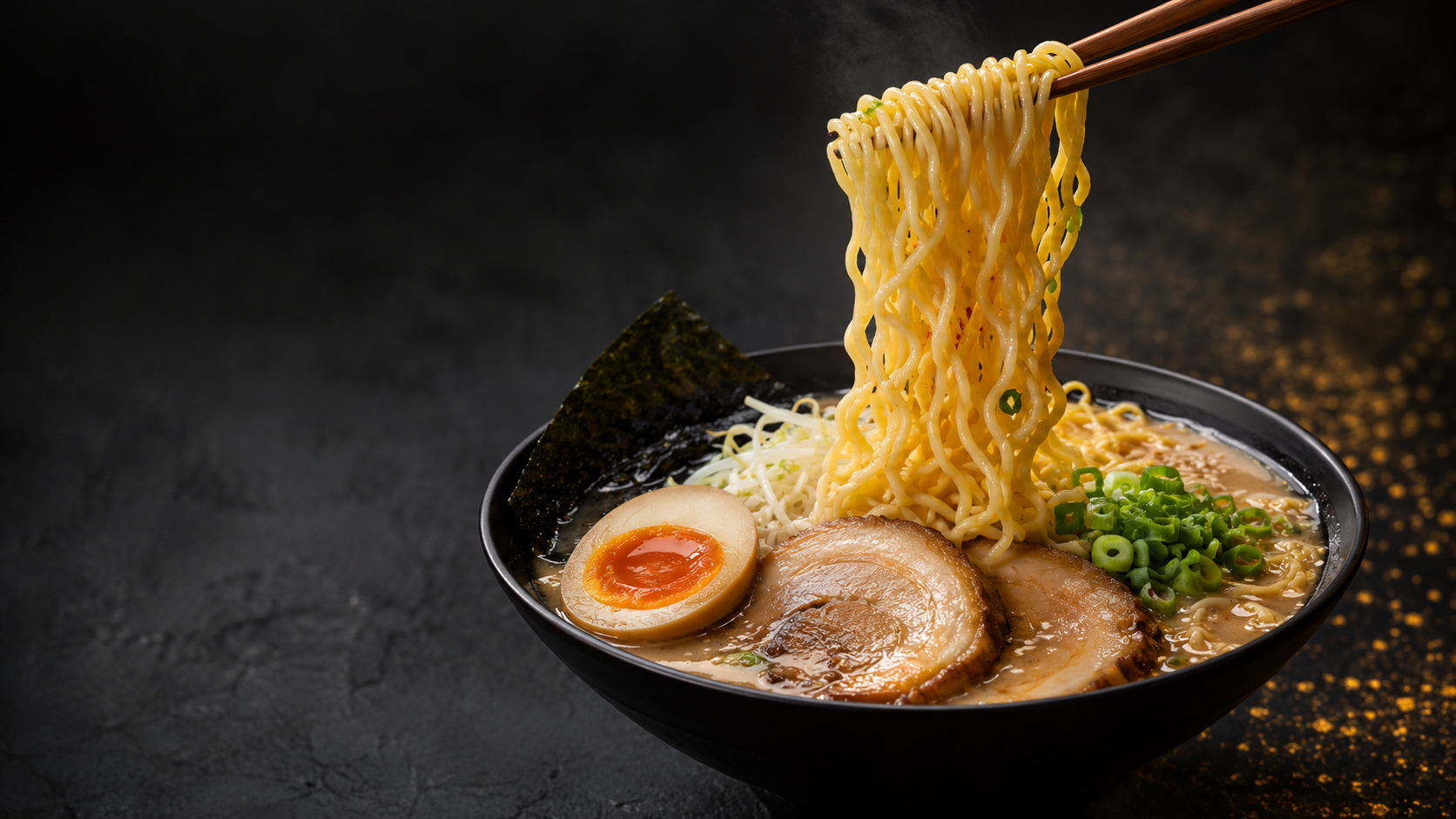
2. Lead with an impossible-to-hold hero shot
The single most powerful stopper is a moment real food cannot hold: noodles frozen mid-lift, cheese caught mid-drip, a spoon suspended in a bowl. A food replica captures motion that real food cannot, and the “wait, is that real?” reaction is exactly the pause you need to earn a walk-in. Place one dramatic hero piece where the eye lands first, then let the rest of the window support it.
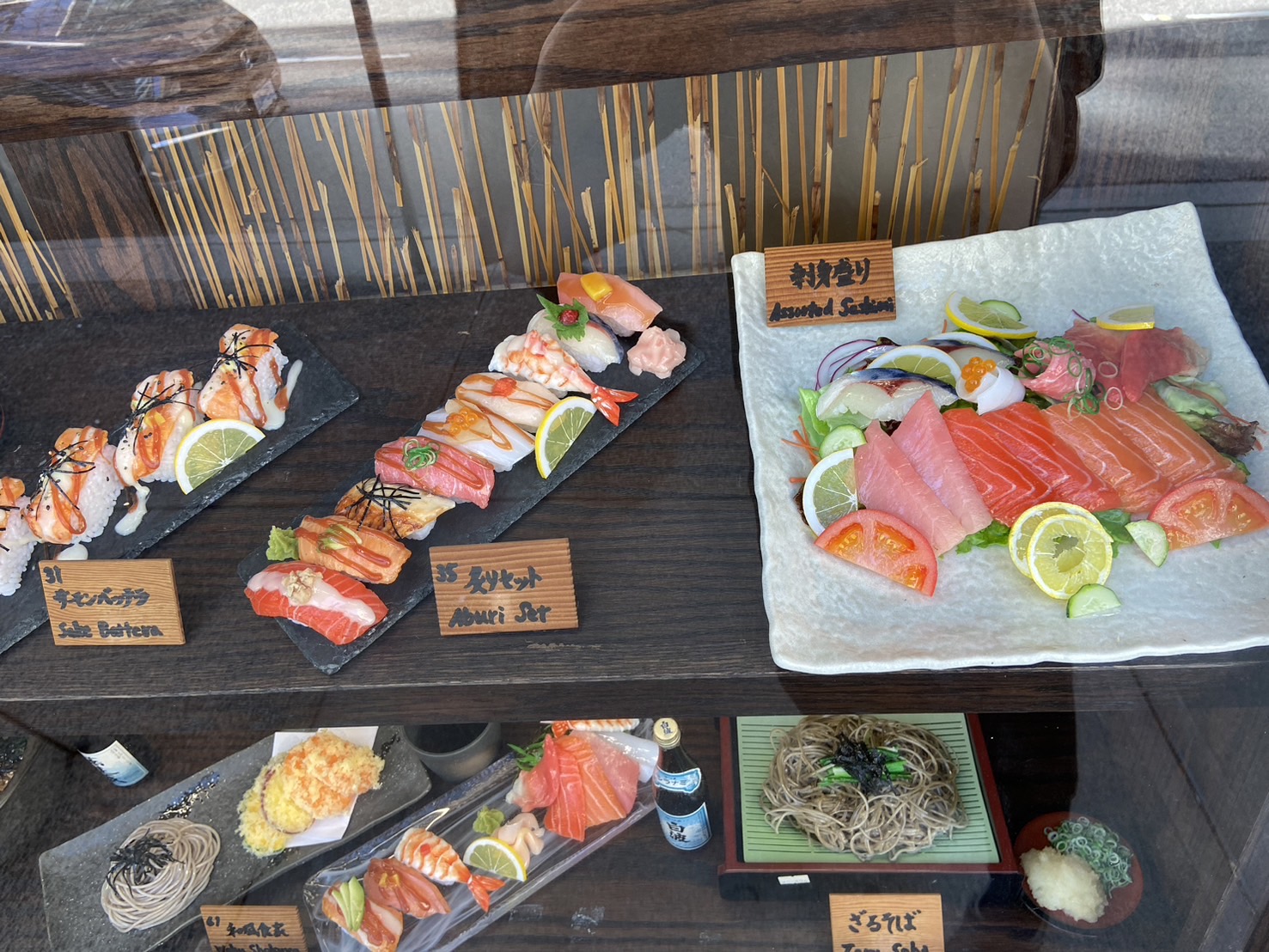
3. Show gloss and freshness under good light
Appetite lives in sheen and freshness, and light is what reveals them. Shoppers perceive well-lit displays as more valuable, and food especially depends on light to show gloss, moisture, and texture. A replica sashimi platter holds that just-plated shine, where real fish would dull and dry within the hour. Light the window from above and slightly in front, and keep it lit after dark when your window has the least competition.
4. Work the sidewalk from the storefront
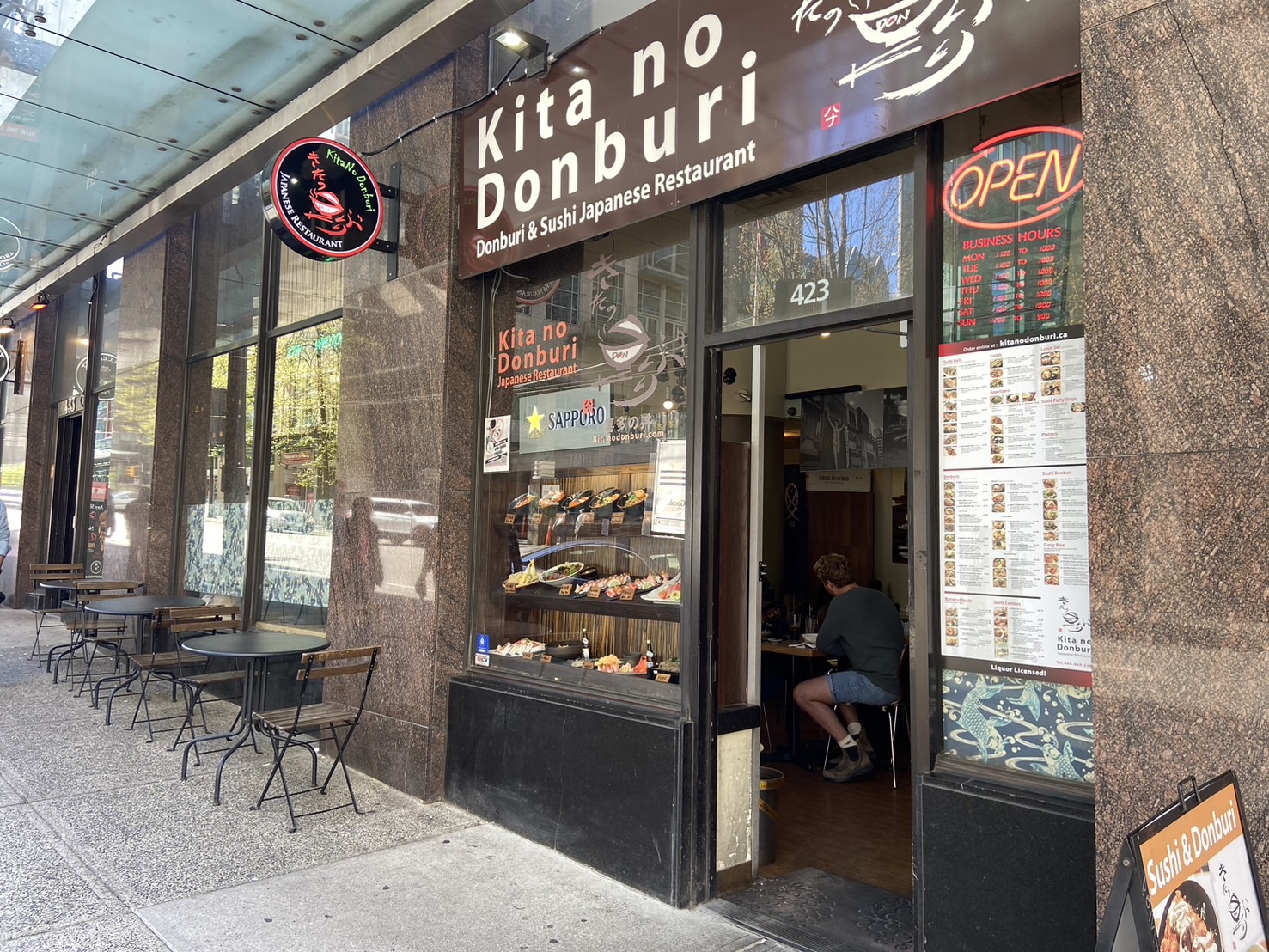
A display only works if it is visible from where people actually walk. Position it in the sightline of approaching foot traffic, not just for diners already seated inside. A storefront display converts passersby into customers, and the closer it sits to eye level at the sidewalk, the more it earns. Check the view from the street at the angle people approach from, and clear any signs or reflections blocking it.
5. Build a browsable, tiered case
Stepping dishes up across tiers brings more of them into the sightline and lets a passerby browse the whole menu without crowding one shelf. Products at eye level are far more likely to be noticed and chosen, with Retail TouchPoints putting eye-level items around 82% more likely to be picked up, so use the upper shelves for your highest-margin heroes. A tiered display shows more dishes at eye level, which increases the odds each one gets seen.
6. Go upscale with pedestals and negative space
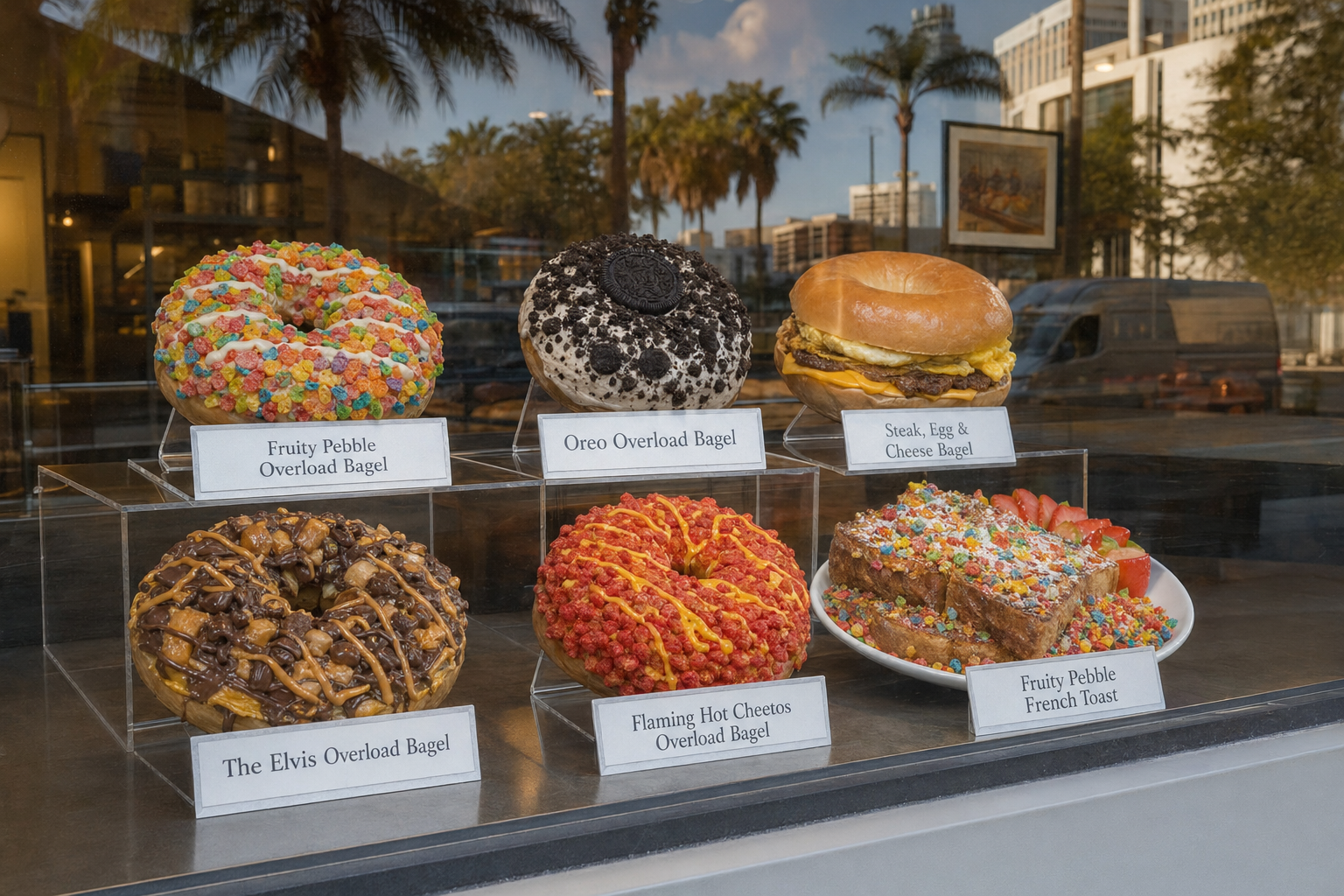
Fine dining does not crowd the glass. A few dishes on clean pedestals, with generous space around each, reads as confidence and quality. Negative space makes each dish look more valuable. Use clear acrylic risers so the food appears to float and the fixtures disappear, and keep the selection tight: three or four signature plates, not the whole menu.
7. Frame hero dishes like a classic bistro
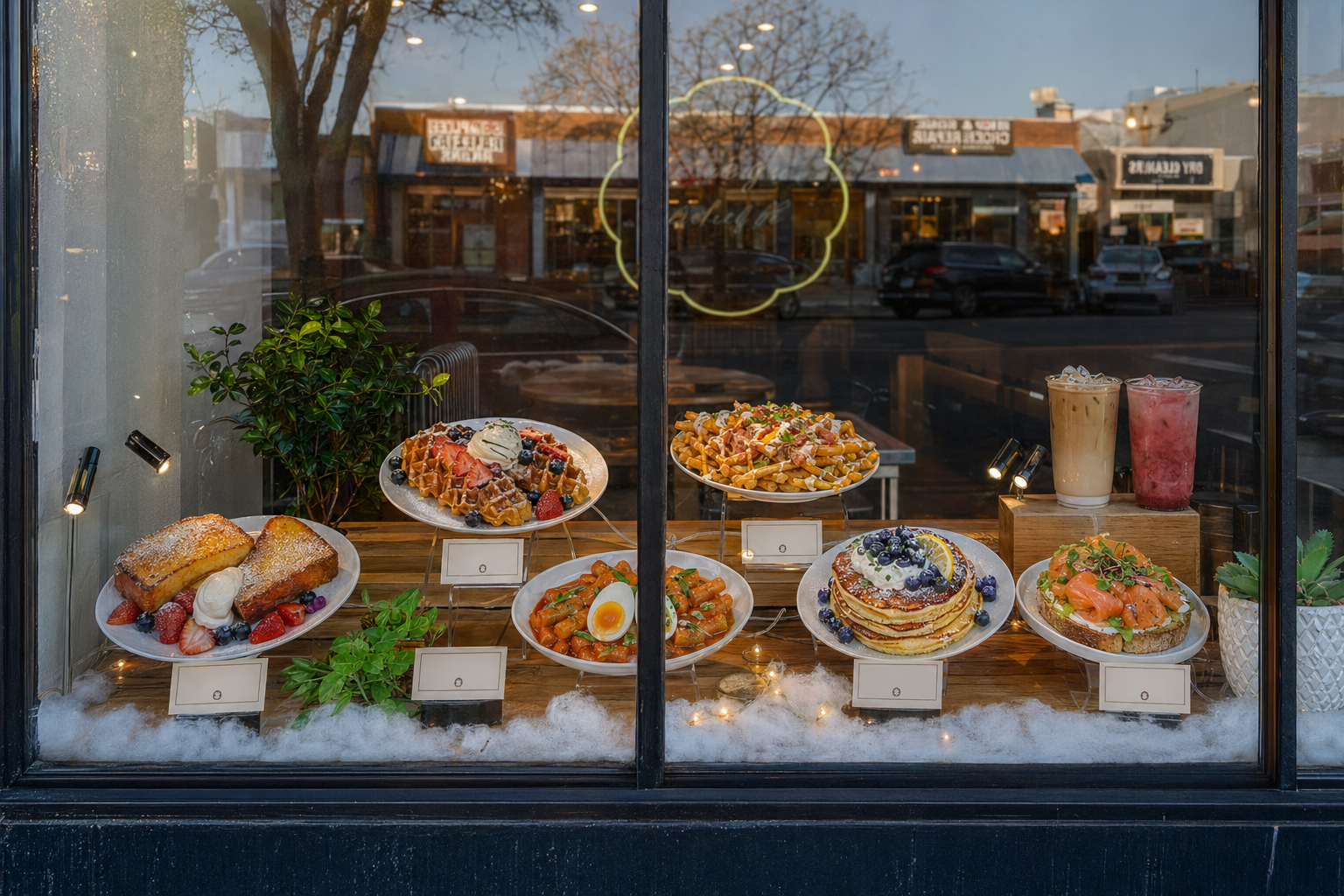
A short lineup of signature dishes, each with a small, legible label, turns your window into a confident statement of what you do best. Labels let the display double as a menu, so a passerby can read the dish and the price without stepping in. Pair each hero with its name and price, and choose dishes that photograph well: layered, glossy, or generously portioned.
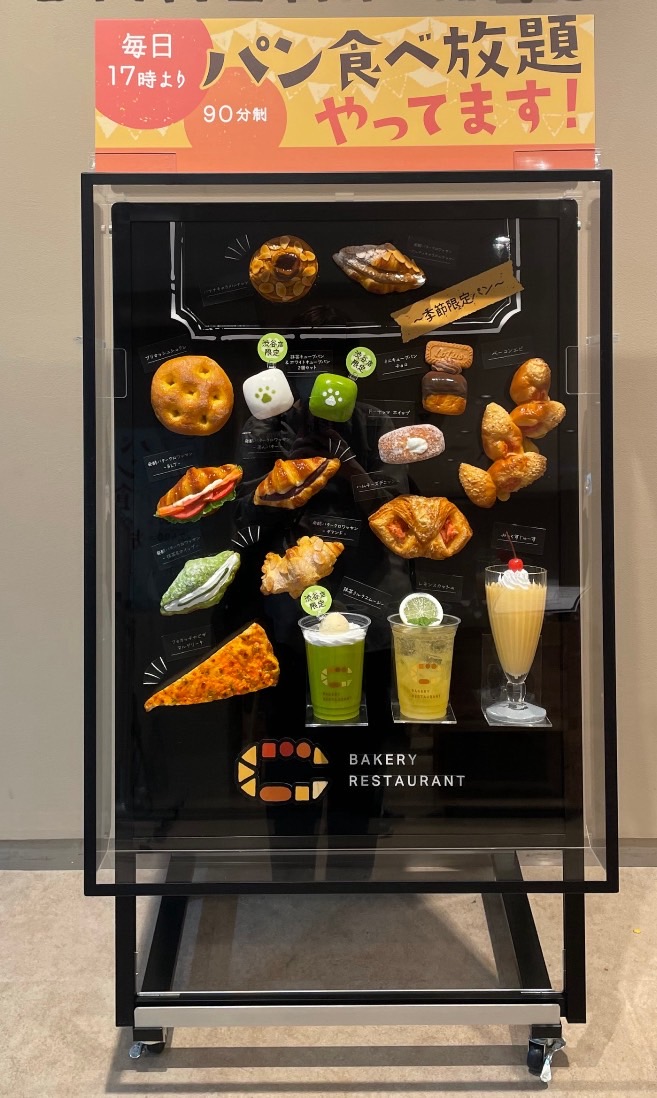
8. Put a glass case right at the door
For cafes, bakeries, and counter-service spots, a glass case at the entrance lets people browse up close before they order. Because customers view it from inches away, this is the place for your most detailed pieces and your best impulse items: the pastry, the slice, the signature bowl. A display case near the entrance speeds up ordering and drives add-ons.
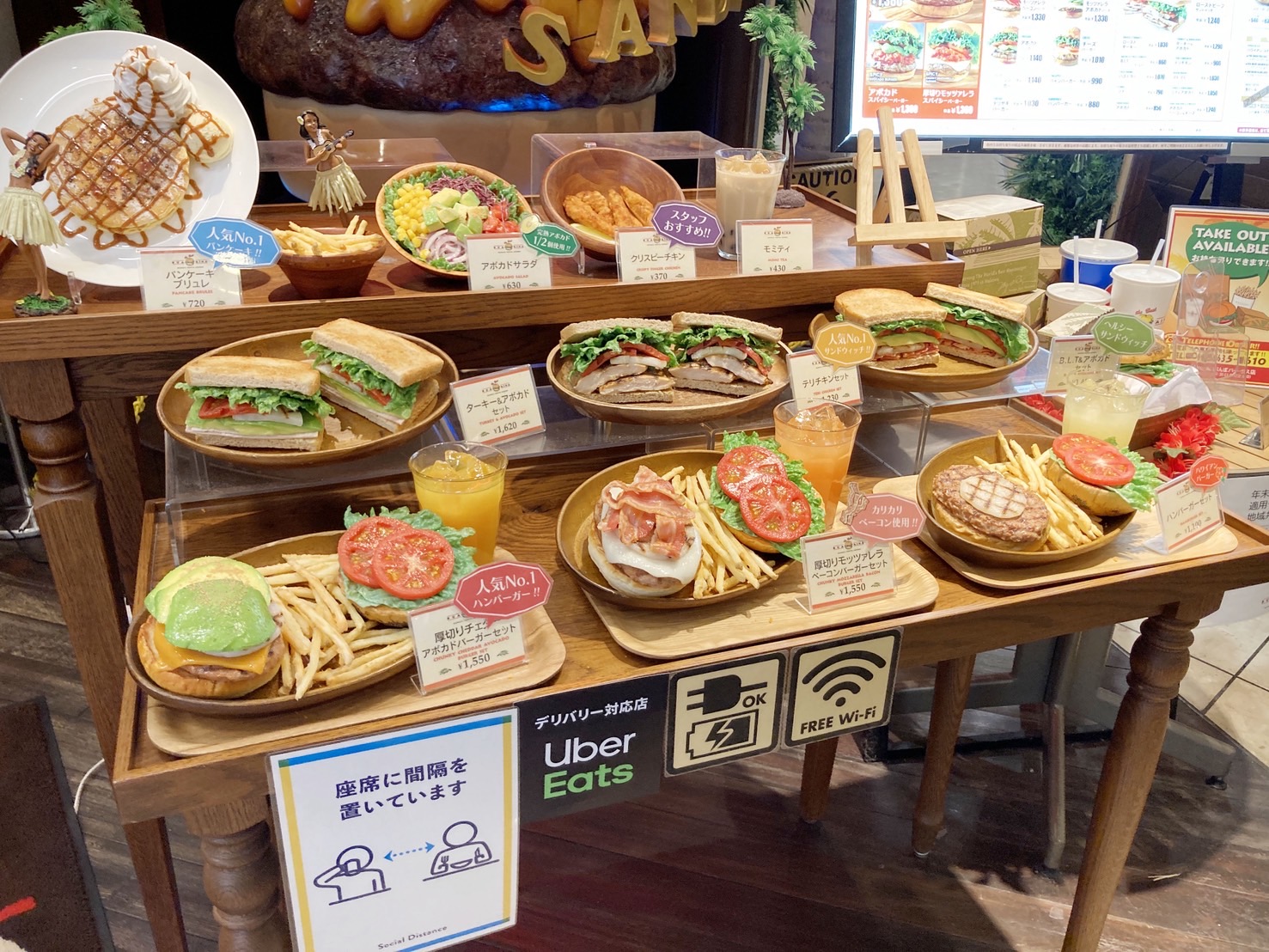
9. Pair the food with a drink
Showing a dish next to its ideal drink plants a larger order before the customer sits down. A replica beer, cocktail, or dessert drink beside the main dish suggests the pairing and nudges check size upward. This is a quiet upsell that works entirely through the glass, and the drink replica holds its perfect pour and head indefinitely.
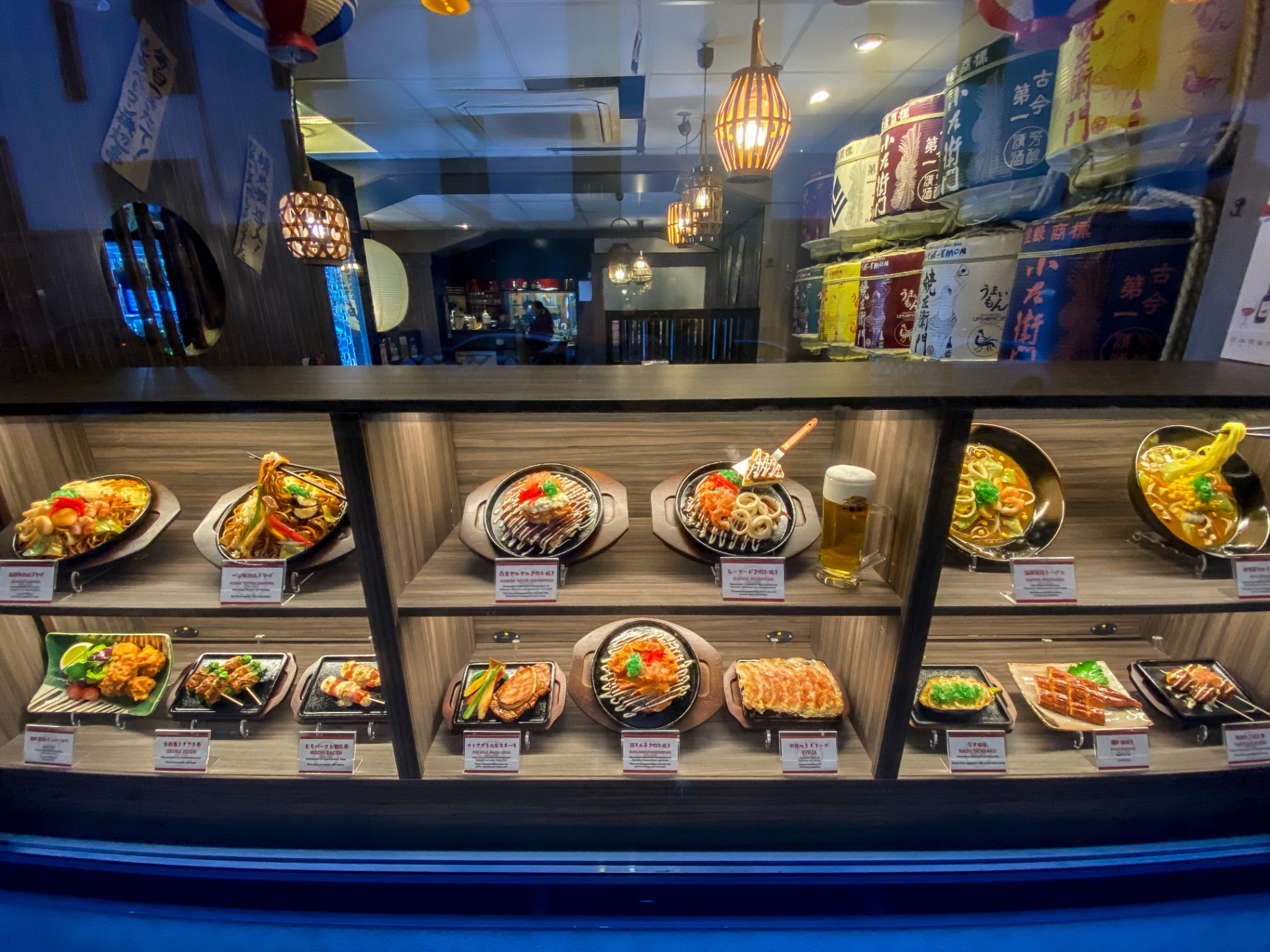
10. Make it swappable for seasons and specials
The best displays evolve. Magnetic-backed pieces let you restage the window in seconds, so a seasonal dish or a limited-time special can appear and disappear without commissioning a whole new display. Magnetic mounting lets you swap pieces without drilling, which keeps the window current with your menu year-round.
What makes these displays convincing
Every idea here depends on one thing: the pieces have to read as real. Generic mass-produced fake food gives itself away up close with seams, flat color, and a plastic sheen, and it will not make anyone stop. A genuine replica is hand-sculpted from your actual dish, cast in resin and silicone, and hand-painted down to the char, gloss, and portion, which is what creates the “is it real?” moment that pulls people in. These are different products, not cheaper and pricier versions of the same one.
Custom Food Replica builds made-to-order window displays matched to your exact dishes, made by Iwasaki, the Japanese company at the origin of the food replica craft, and shipped nationwide. Pricing is all-in and starts at $400 per piece, with the per-piece price coming down as a full window fills our shipping containers. See the full cost breakdown, the step-by-step display buyer's guide, or the restaurant ROI calculator.
One note on care: replicas are built for indoor display. Keep them out of direct all-day sunlight, dust them gently, and most windows stay showroom-fresh for 3 to 5 years, with well-maintained pieces lasting 10 years or more.
The bottom line
A restaurant window display earns its cost by converting the foot traffic already passing your door. Lead with signature dishes, lift them to eye level, light them well, and keep the pieces realistic, and the window sells for you every hour, day and night, for years to come.
From $400 per piece, all-in.
Built to your exact dishes, shipped nationwide, quoted to your window.
Frequently asked questions
- What is a restaurant window display?
- It is a storefront arrangement of realistic food models, also called fake food or display fake foods, that shows your dishes to people on the sidewalk to attract walk-ins.
- Do window displays actually increase foot traffic?
- Yes. Retail research finds a well-executed window display can lift foot traffic by around 23%, because most people decide where to eat based on what they see.
- What should go in a restaurant window display?
- Four to eight signature dishes, lifted to eye level, lit well, and chosen because they read clearly from the street, such as layered, glossy, or generously portioned plates.
- Is fake food better than real food for a window display?
- Yes, for display. Real food spoils, wilts, and violates health codes within hours, while a replica holds its plated look for years with simple indoor care.
- How long does a food replica window display last?
- Most displays last 3 to 5 years in normal indoor use, and well-maintained pieces kept out of direct sunlight can last 10 years or more.
- Can I change a window display when my menu changes?
- Yes. Magnetic-backed pieces let you restage the window in seconds with no drilling, so seasonal dishes and specials are easy to rotate in and out.
- How much does a restaurant window display cost?
- Custom replicas start at $400 per piece all-in, including shipping and customs, with the per-piece price decreasing as a full window is built. Each window is quoted to your dishes.
About the author
Custom Food Replica is the authorized US distributor and official partner of Iwasaki, the Japanese maker at the origin of the shokuhin sampuru food replica craft. We build hyperrealistic, made-to-order window displays for U.S. restaurants, cafes, and retailers, each sculpted and hand-painted to match a client's exact dishes and shipped nationwide.
Sources
- VM & Retail Magazine, reporting on window displays and their effect on foot traffic. Retail research, not a restaurant-specific study.
- Shop! Association (Shop! Magazine), research on the share of buying decisions driven by what shoppers see in store.
- Retail TouchPoints, coverage of eye-level placement and the likelihood a product is noticed and chosen.
- Custom Food Replica restaurant ROI calculator, the payback model behind our walk-in math. It is a model, not a guarantee.