
Comparison · Displays
Food Replicas vs Digital Menu Screens: Which Drives More Walk-Ins?
By the Custom Food Replica team · Authorized US distributor & official partner of Iwasaki, Japan's original food replica makers.
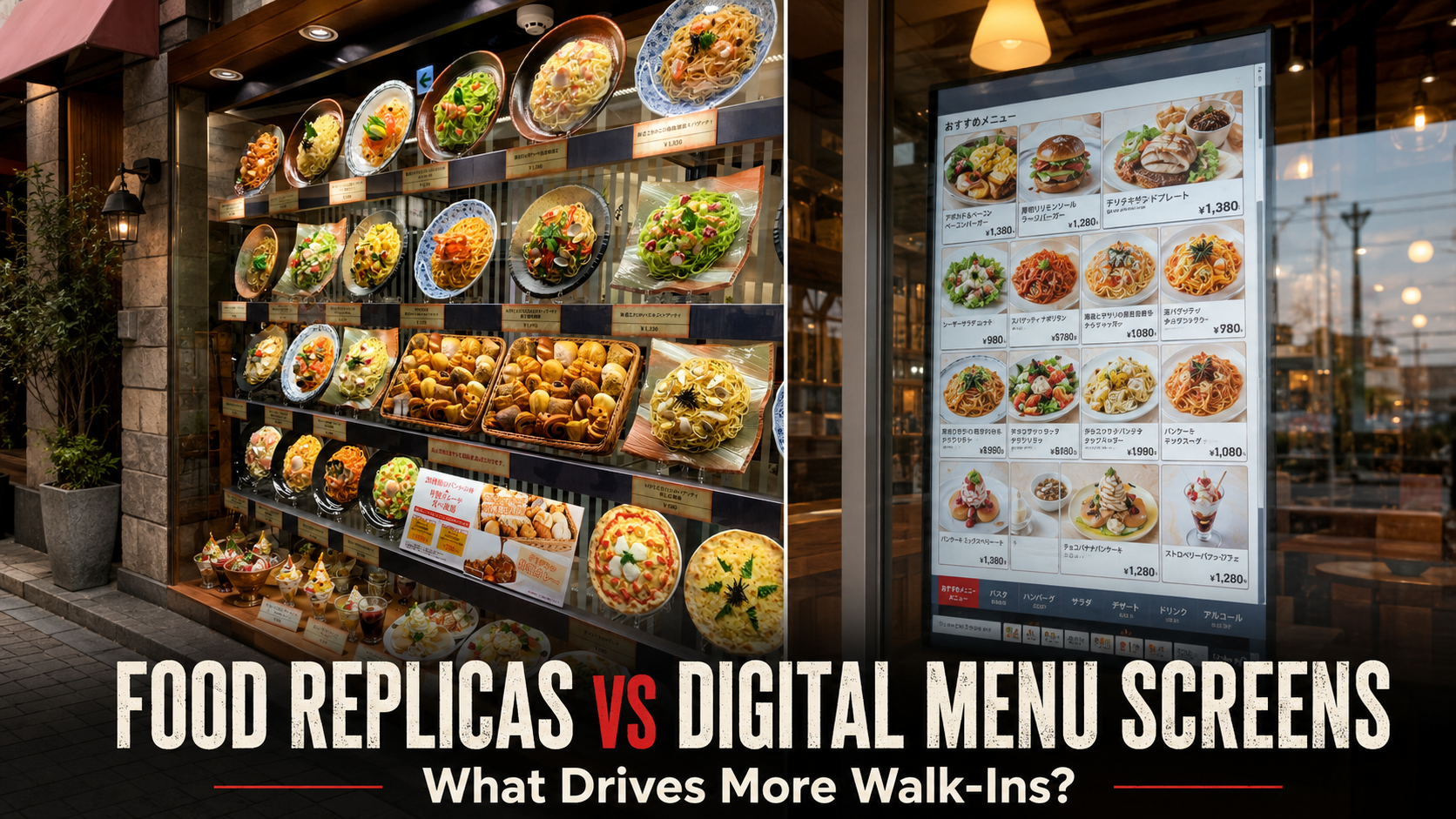
Quick answer
For a daylight-facing window whose job is to stop a stranger walking past, food replicas win. They are physical, life size, readable in full sun, need no power, and create real appetite. Digital menu screens win once someone is already inside or in line, where the information changes and needs to be updated fast. The best answer for most restaurants is not one or the other. Use replicas at the window to earn the walk-in and screens inside to inform and upsell.
Key facts
- A window display has one job: make a passerby stop and walk in. A menu screen has a different job: inform someone who already came in.
- Sunlight is the deciding factor. Most standard screens wash out in a daylight-facing window, while a replica needs no brightness at all.
- A screen is an ongoing cost: power, mounts, content updates, and eventual replacement. A replica is a one-time cost that keeps working.
- Custom Food Replica is the authorized US distributor and official partner of Iwasaki, the origin of the food replica craft.
Two tools, two different jobs
The comparison usually gets framed as old versus new, which is the wrong frame. These are two tools built for two different moments in a customer journey.
A window display works on someone who has not decided anything yet. They are walking, they are looking at their phone, and you have about two seconds of peripheral vision to earn a glance. A three dimensional replica of your actual dish, at full size, in real light, is a physical object in their path. It reads as food before the brain reads it as advertising.
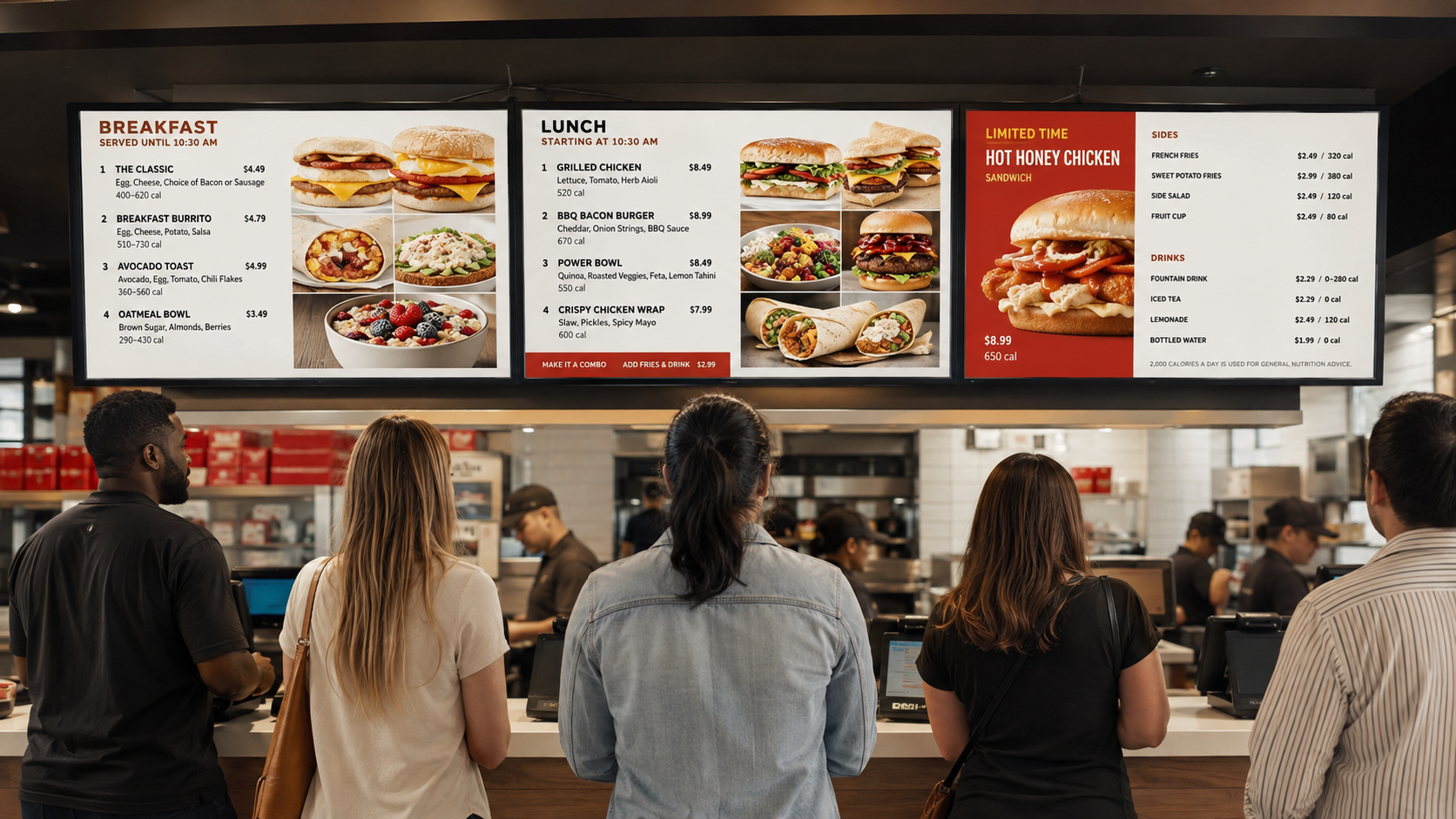
A digital menu screen works on someone who already walked in. Now the job is different: explain options, show combos, push the high margin item, and change the daily special without printing anything. That is a job a replica cannot do, and a screen does it well.
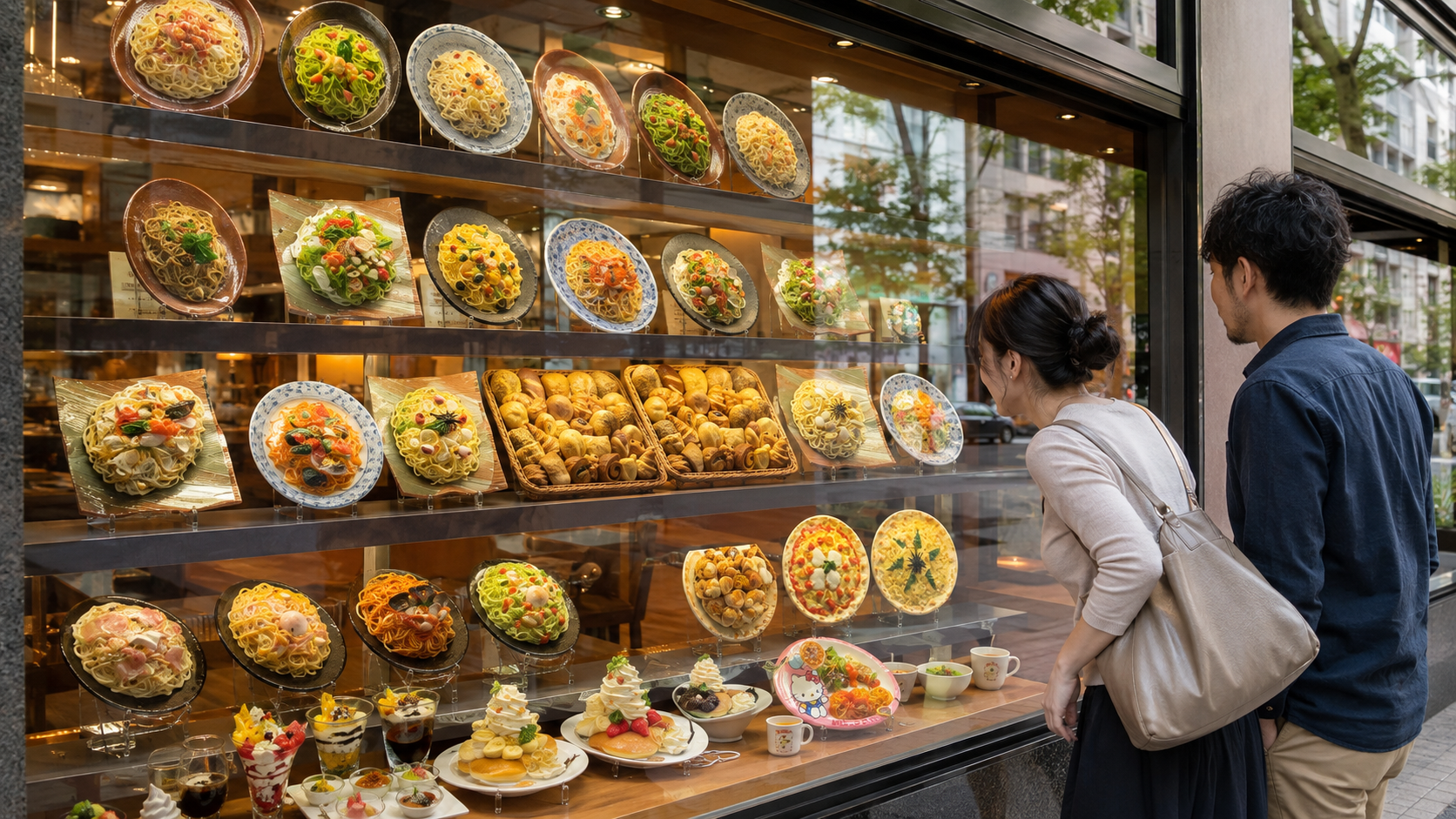
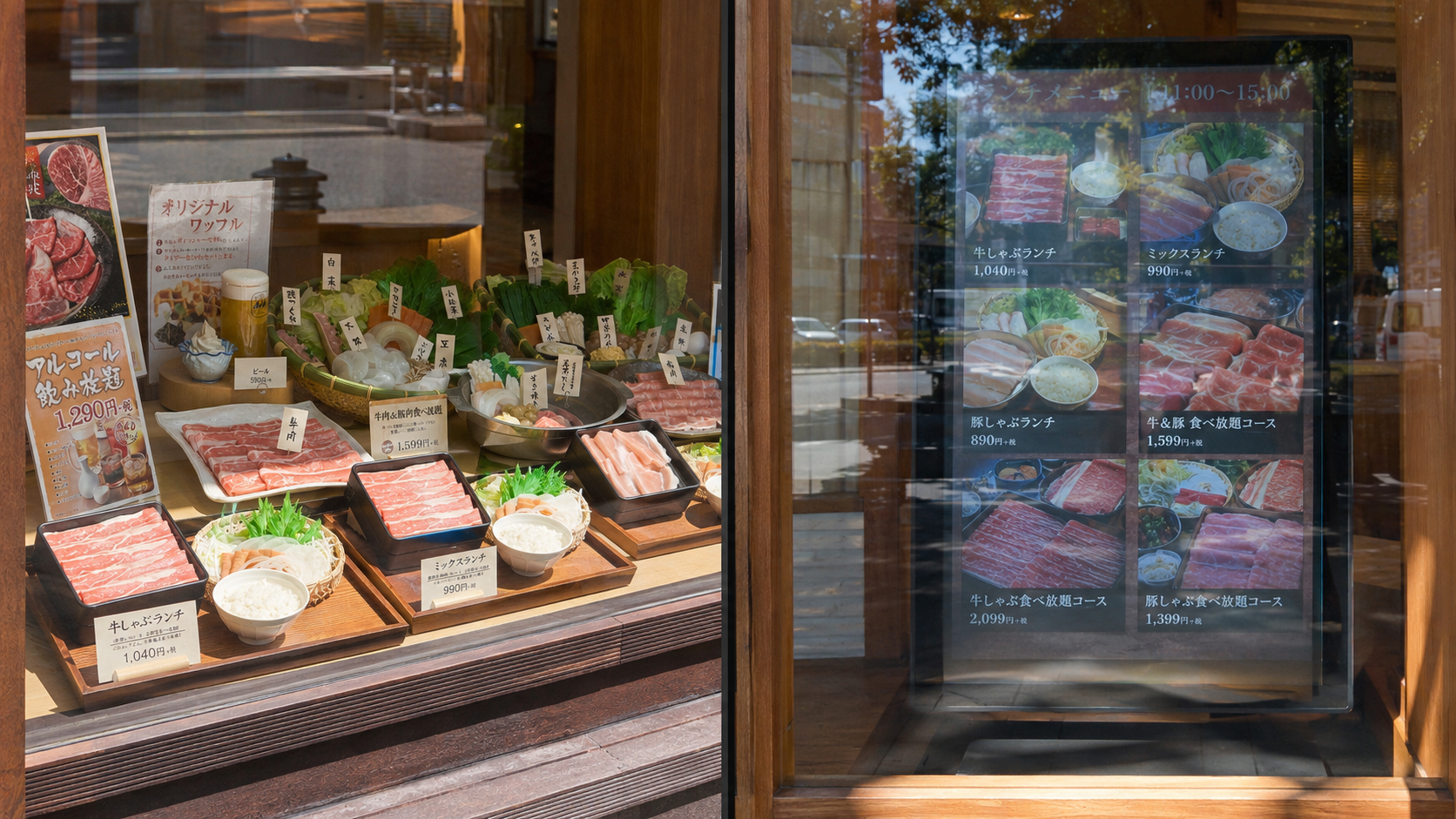
Side by side comparison
| Criteria | Food replicas | Digital menu screens |
|---|---|---|
| Main job | Stop foot traffic and create appetite from the sidewalk | Inform and upsell customers who are already inside or in line |
| Daylight visibility | Unaffected, it is a physical object lit by the sun | Washes out unless you buy a high-brightness outdoor rated panel |
| Appetite appeal | Three dimensional, life size, reads as real food up close | A photo of food, which shoppers scroll past all day |
| Changing prices or items | Requires a new piece for a new dish | Instant, edit it from a laptop or phone |
| Power and connectivity | None required | Power, mounting, and usually a network connection |
| Ongoing work | Occasional dusting, keep out of harsh direct sun | Content updates, software, downtime, eventual hardware replacement |
| Lifespan | Typically 3 to 5 years indoors, 10 years or more when well maintained | Commercial panels are commonly rated for a few years of daily use |
| Cost shape | One-time, from $400 per piece all-in | Hardware plus install plus power plus content, repeating |
| Best placement | Daylight-facing window, entrance, counter, display case | Indoor menu board, order counter, drive-thru, promo loop |
The daylight problem
This is the single most underestimated factor when a screen goes into a window. Indoor panels are built for indoor light levels. Put one behind glass facing the street and two things happen: the sun overpowers the picture, and the glass turns into a mirror reflecting the sidewalk back at the viewer. Solving it means buying a high-brightness, outdoor rated display, which is a different and far more expensive product than the screen most operators are picturing.
A replica has no such failure mode. Bright sun makes it look better, not worse, because it is a real object being lit the same way real food would be.
Where digital screens genuinely win
An honest comparison has to say where the screen is the right buy, and there are several places where it clearly is:
- Indoor menu boards above a counter, where pricing and items change.
- Drive-thru ordering, where the menu has to be legible and updated remotely.
- Daily specials, limited time offers, and seasonal promotions.
- Wait-time messaging, loyalty prompts, and order-ready displays.
- Multi-location chains that need one content update to hit every store.
If the content changes weekly, a screen is the correct tool and a replica is not. Nobody should sculpt a physical model of a two week promotion.
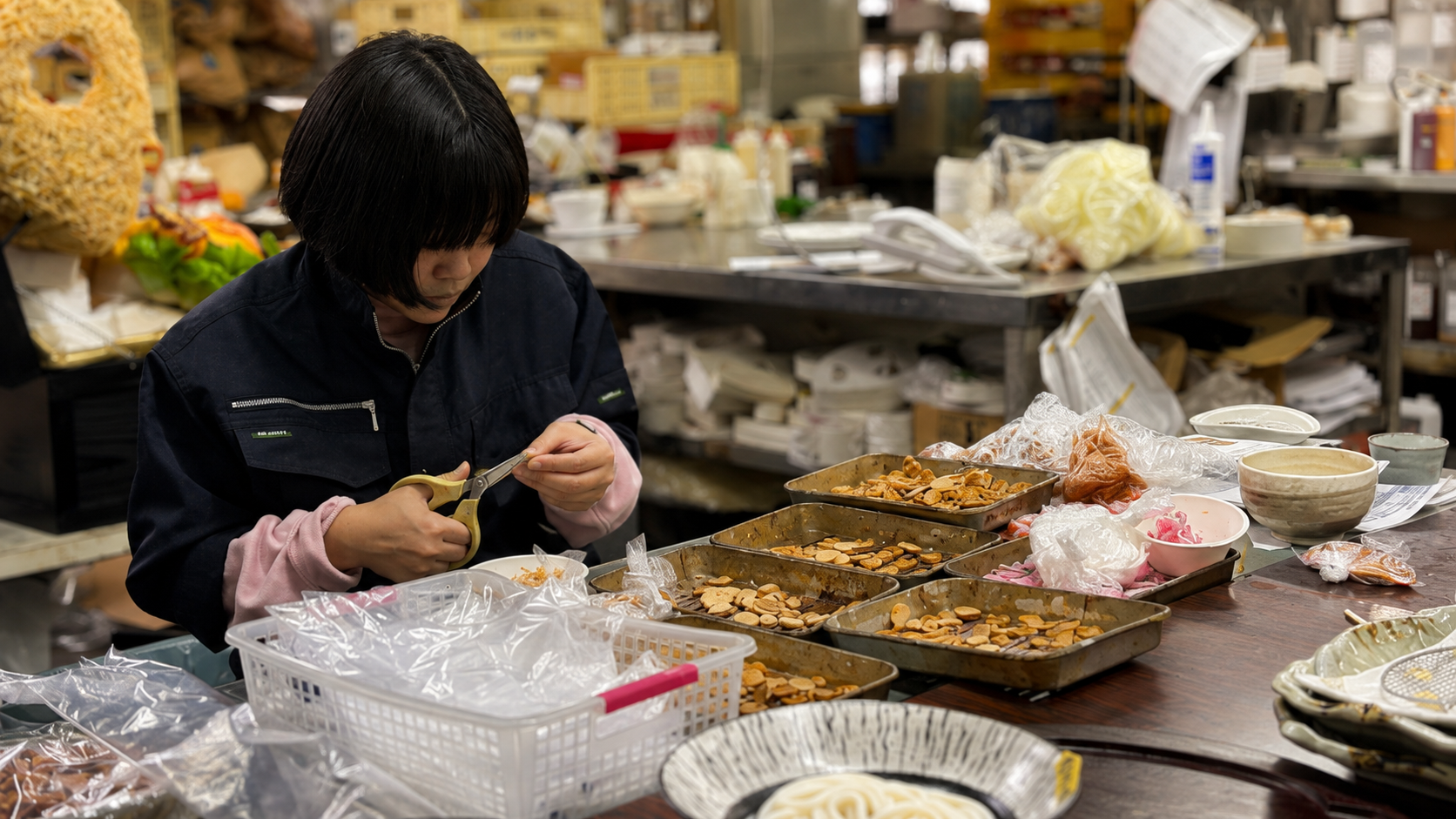
The advantage of a replica is not just that it is physical. It is that it is made by hand, dish by dish, to look like the real thing under real light. That realism is why it stops someone on the sidewalk before they have read a single word.
What each really costs over the long run
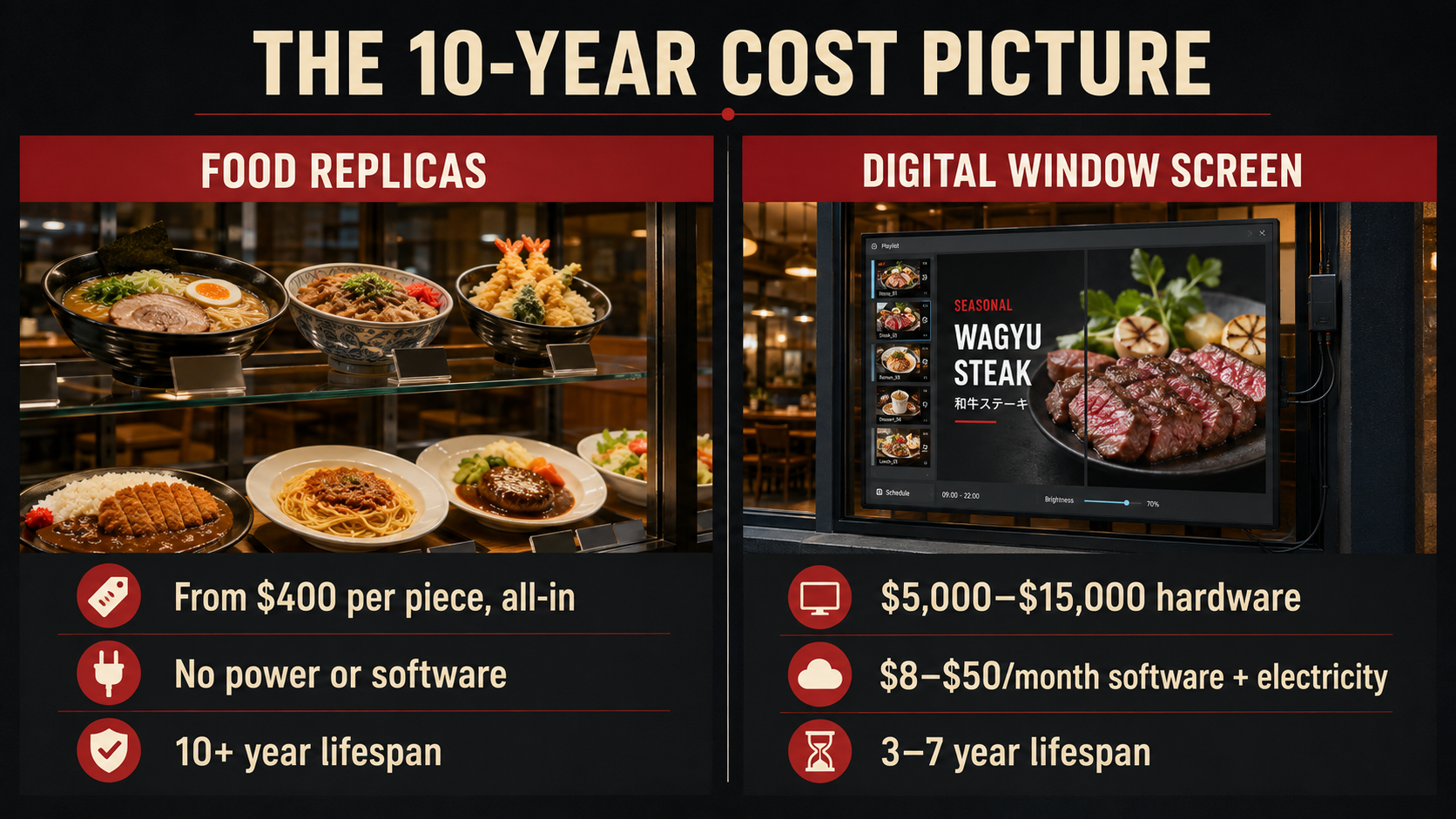
A screen is not a purchase, it is a subscription in disguise. The panel is only the starting point. Add the mount, the electrical work, the media player, the content software, the person who updates it, the power draw of a display running open to close, and the fact that commercial panels running daily hours are typically rated in years, not decades. Every one of those lines repeats.
A replica is a one-time purchase. Pricing starts at $400 per piece all-in, including shipping and customs, and the per-piece price comes down as an order fills a container, so a full window costs less per piece than a single item. After that there is no power bill, no content calendar, and nothing to update.
On lifespan, be realistic rather than optimistic: most pieces stay showroom-fresh for 3 to 5 years indoors, and well-maintained pieces kept out of harsh all-day direct sun can last 10 years or more. Replicas are built for indoor display, so if you run a food truck or an outdoor stand, bring the pieces back inside after service and they will hold their look far longer.
Want the numbers for your own place? The restaurant ROI calculator and the food truck ROI calculator let you plug in your own foot traffic and ticket average.
Using both together
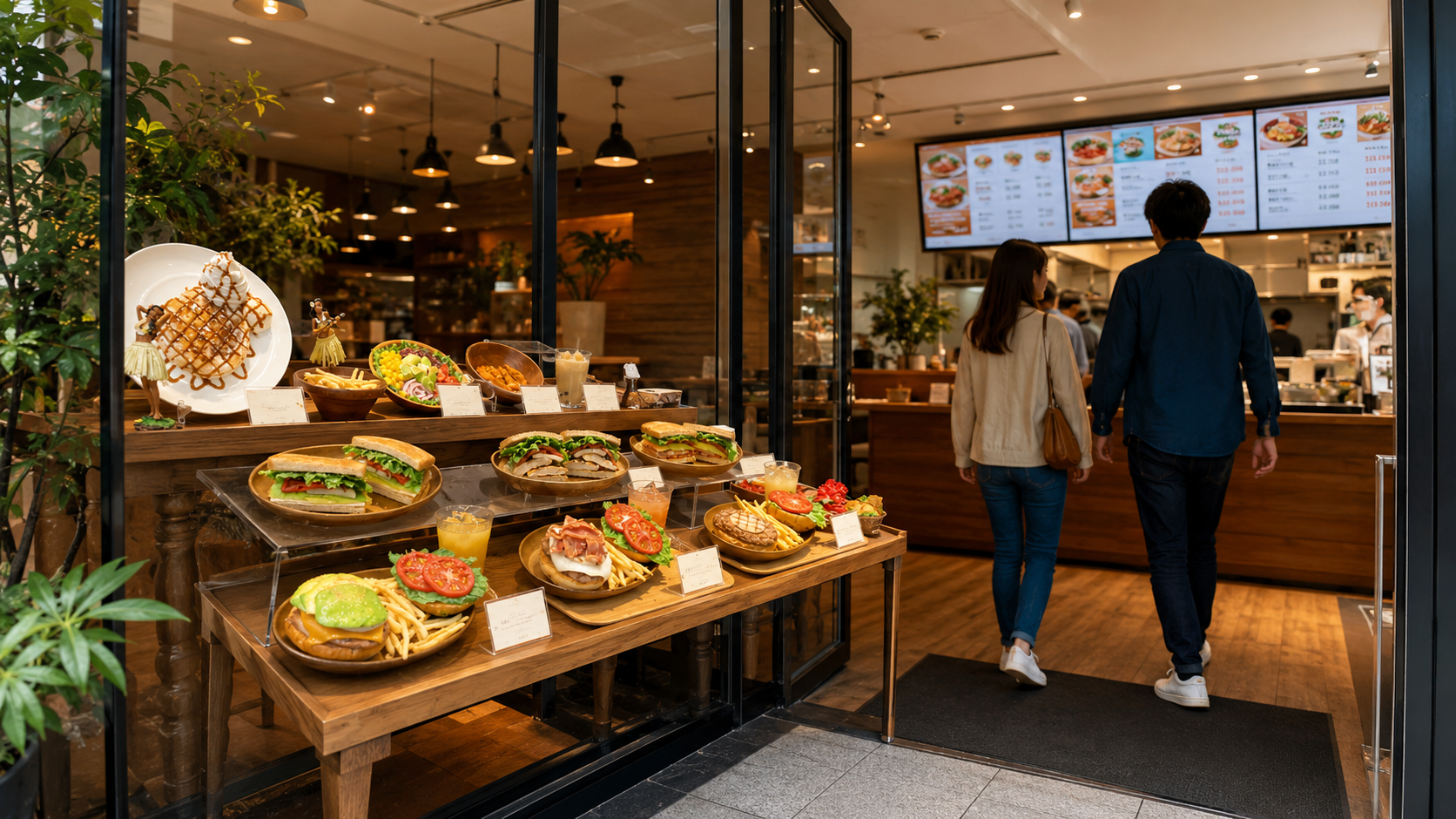
The strongest setup is not a choice at all. Put replicas of your signature dishes in the daylight-facing window and at the entrance, where the only job is to stop someone and make them hungry. Put screens inside, above the counter or beside the register, where the job is to explain the menu, move people through the line, and push the items you want to sell.
Each tool then does the job it is actually good at, and neither one is asked to do something it will fail at.
Which one do you need?
Use food replicas when
You have a street-facing window, entrance, or counter and the goal is to stop passersby, show what your food actually looks like, and do it in full daylight with no power.
Use a digital menu screen when
The content changes often, the viewer is already inside or in line, and you need pricing, specials, or promotions you can update remotely.
The bottom line
Digital screens are excellent at communicating to people who already walked through your door. Food replicas are what get people through the door in the first place. If your problem is that not enough people are walking in, a brighter screen is not the fix. A window that shows your actual food, at full size, in real light, is.
From $400 per piece, all-in.
Built to your exact dishes, shipped nationwide, quoted to your window.
Frequently asked questions
- Are food replicas better than digital menu screens?
- For a daylight-facing window whose job is to stop passersby, yes, because a physical replica reads as real food and never washes out in sunlight.
- When is a digital menu screen the better choice?
- When the information changes often, such as indoor menu boards, daily specials, drive-thru ordering, and promotional loops seen by customers already inside.
- Do digital screens work in a restaurant window?
- Only if you buy a high-brightness, outdoor rated panel, since a standard screen is difficult to read in direct daylight.
- Can I use food replicas and digital screens together?
- Yes, and that is usually the strongest setup: replicas in the window to pull people in, screens inside to inform and upsell.
- How much does a food replica display cost?
- Custom replicas start at $400 per piece all-in, including shipping and customs, with the per-piece price coming down at higher quantities.
- How long does a food replica last?
- Most pieces stay showroom-fresh for 3 to 5 years indoors, and well-maintained pieces kept out of harsh direct sunlight can last 10 years or more.
- Do food replicas need power or maintenance?
- No power at all, and maintenance is limited to gentle dusting and keeping pieces out of all-day direct sun.
Keep reading
- Restaurant window display ideas that pull walk-ins
- How to make a fake food display: a buyer's guide
- Realistic food models: cost and uses
- What is shokuhin sampuru?
About the author
Custom Food Replica is the authorized US distributor and official partner of Iwasaki, the Japanese maker at the origin of the shokuhin sampuru food replica craft. We build hyperrealistic, made-to-order food replicas for U.S. restaurants, food trucks, and retailers, each sculpted and hand-painted to match a client's exact dishes and shipped nationwide.